
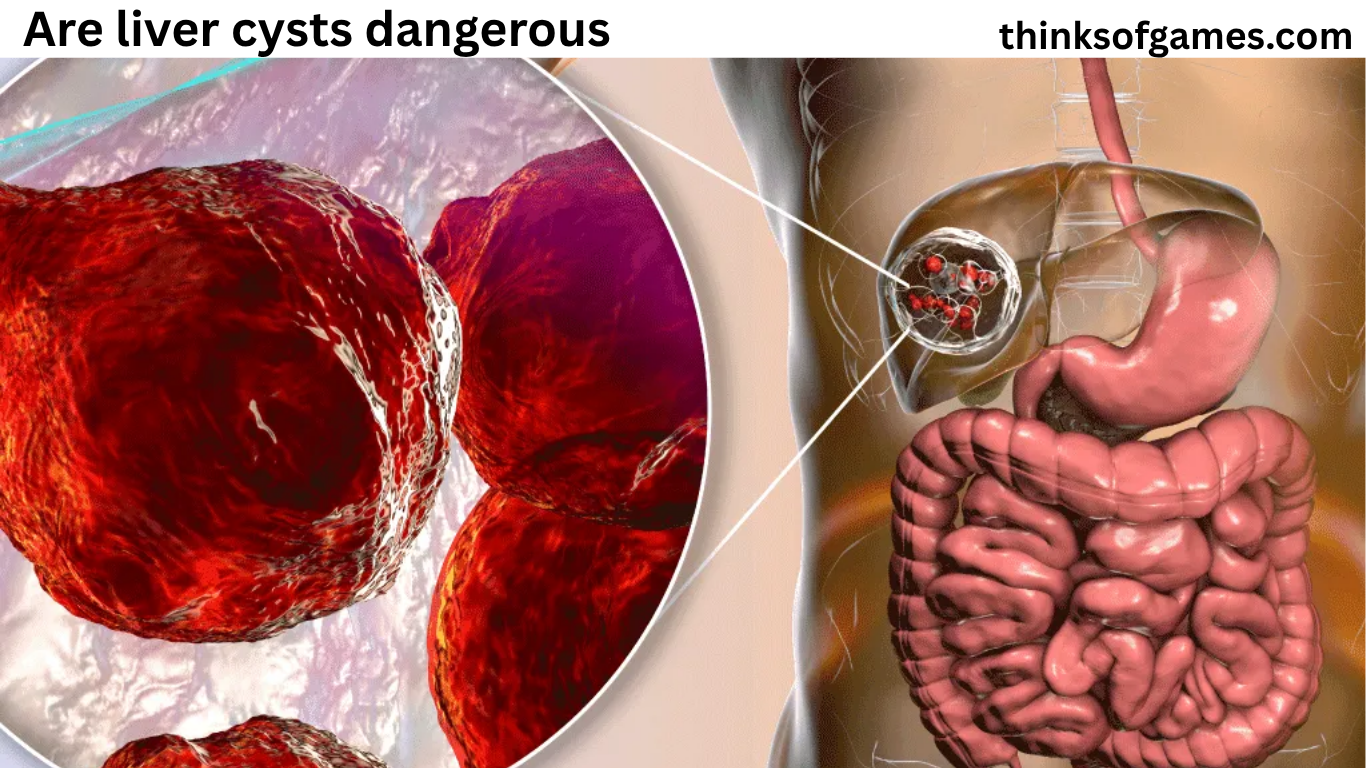
Finding the words “liver cyst” on an ultrasound, CT scan, or MRI can be frightening. Many people immediately wonder, “Are liver cysts dangerous?” or worry that a cyst could mean liver cancer.
The good news is that most liver cysts are not dangerous. Simple liver cysts are fluid-filled sacs that are usually benign, meaning they are not cancerous. Many are discovered by accident during an imaging test performed for an unrelated health concern, and most never cause symptoms or require treatment.
However, not every cystic liver lesion is the same. The type of cyst, its appearance on imaging, its size, its location, the symptoms it causes, and whether there are multiple cysts all matter. A cyst with unusual features may need additional testing because some less common cystic conditions can require treatment.
The important point is this: having a liver cyst does not automatically mean that something is seriously wrong with your liver.
This guide explains what liver cysts are, when they are harmless, when they can become dangerous, what symptoms to watch for, how doctors diagnose them, when treatment is needed, and what you can expect over time.
Are Liver Cysts Dangerous?
For most people, a liver cyst is not dangerous.
A simple hepatic cyst is usually a benign, fluid-filled structure that does not interfere with normal liver function. Many people have no symptoms at all and may never know they have one unless an imaging test happens to find it. Mayo Clinic also notes that simple liver cysts usually cause no symptoms and generally do not need treatment.
The situation can be different when a cyst:
- Becomes very large
- Causes persistent abdominal pain
- Presses against nearby organs
- Blocks a bile duct
- Becomes infected
- Bleeds or ruptures
- Has unusual features on an ultrasound, CT scan, or MRI
- Is associated with polycystic liver disease
- Is caused by a parasitic infection
- Represents a cystic tumor rather than a simple cyst
Therefore, the best answer to “Are liver cysts dangerous?” is not simply yes or no.
The more useful question is:
“What type of liver cyst do I have, and does it have any features that require evaluation or treatment?”
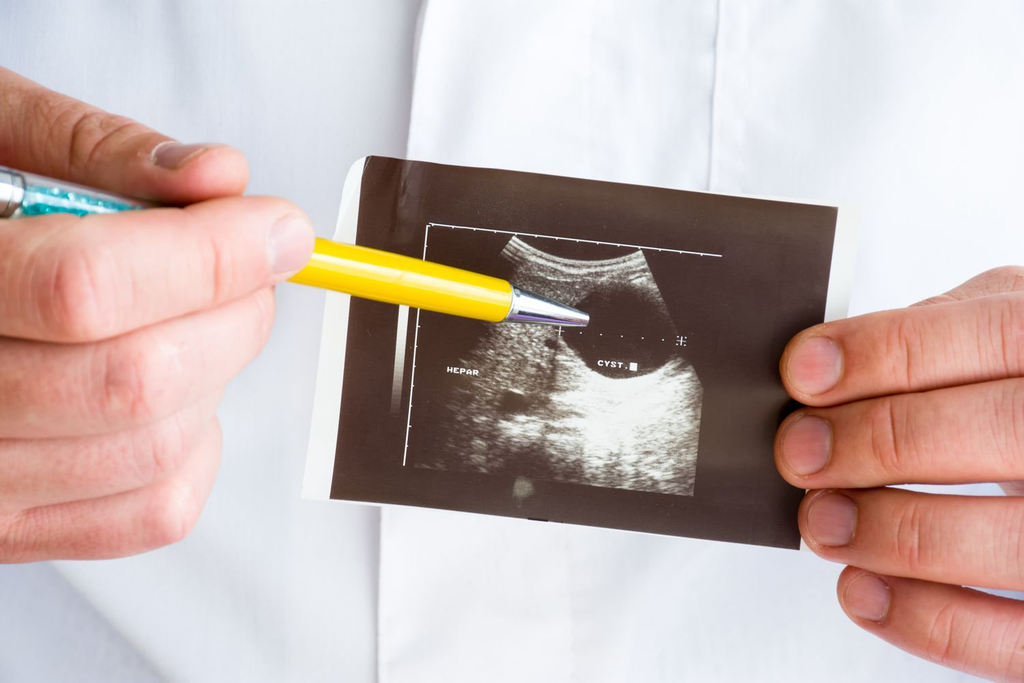
That distinction is important because a typical simple cyst and a complex cyst can have very different implications.
Also read:What Is Liver Biopsy Marietta and How Does the Procedure Work?
What Is a Liver Cyst?
A liver cyst is a fluid-filled sac that develops in or on the liver. Doctors may also call it a hepatic cyst.
The liver is located in the upper-right part of the abdomen, underneath the ribs. It performs many important jobs, including processing nutrients, making proteins, helping with digestion, storing energy, and breaking down substances that the body needs to remove.
A simple liver cyst usually does not interfere with these functions.
Most simple liver cysts have a thin wall and contain clear fluid. They are often found during abdominal imaging that was ordered for another reason.
For example, someone might have an ultrasound because of abdominal discomfort. The ultrasound may show a small cyst in the liver even though the cyst has nothing to do with the person’s symptoms.
This is one reason it is important not to assume that every symptom is caused by a liver cyst.
What Causes Liver Cysts?
The cause of many simple liver cysts is not completely understood.
Some experts believe that certain simple cysts develop from abnormalities in small bile duct structures during development. Others may develop for reasons that are not clearly known.
Simple liver cysts are different from cysts caused by infections, inherited disorders, or tumors.
Some important causes and conditions associated with liver cysts include:
- Simple hepatic cysts
- Polycystic liver disease
- Autosomal dominant polycystic kidney disease
- Parasitic infections such as echinococcosis
- Biliary cystic tumors
- Other uncommon cystic liver lesions
Mayo Clinic notes that simple cysts may result from a malformation present from birth, while less common liver cysts can be associated with conditions such as polycystic liver disease, parasitic infection, or liver cancer.
Are Simple Liver Cysts Dangerous?
Usually, no.
Simple liver cysts are generally considered benign. Most remain harmless and do not affect liver function.
The American College of Gastroenterology’s more recent guidance states that people with asymptomatic simple hepatic cysts generally do not need routine surveillance or intervention, regardless of cyst size.
This is an important point because people sometimes assume that a large cyst automatically means cancer or serious disease.
Size alone does not determine whether a liver cyst is dangerous.
Doctors also look at the cyst’s appearance and whether it is causing symptoms.
A typical simple cyst generally has reassuring imaging features. A cyst that has internal partitions, thickened or irregular walls, nodules, calcifications, or other unusual characteristics may require additional evaluation.
Can a Liver Cyst Turn Into Cancer?
A typical simple liver cyst is not the same thing as liver cancer.
Most simple liver cysts are benign. However, some uncommon cystic lesions of the liver can be precancerous or cancerous, which is why doctors pay attention to unusual imaging features.
This does not mean that finding a cyst means you have cancer.
Instead, doctors use imaging characteristics to determine whether a lesion looks like a simple cyst or whether it needs a closer examination.
Features that may prompt further evaluation include:
- Septations inside the cyst
- Thick or irregular walls
- Nodules
- Calcifications
- Internal tissue
- Heterogeneous contents
- Daughter cysts
- Other unusual findings on imaging
The American College of Gastroenterology recommends CT or MRI evaluation when a cyst seen on ultrasound has concerning features such as septations, calcifications, irregular walls, mural thickening or nodularity, heterogeneity, or daughter cysts.
So if your imaging report says “simple hepatic cyst,” that is very different from a report describing a “complex cystic liver lesion.”
What Does a Simple Liver Cyst Look Like?
Doctors can often recognize a simple liver cyst based on its appearance on imaging.
On ultrasound, a typical simple cyst is usually fluid-filled and has characteristic features that distinguish it from solid masses.
CT and MRI can provide additional information when the appearance is uncertain.
Doctors may consider several factors, including:
- The cyst’s size
- Shape
- Wall thickness
- Internal contents
- Presence of septations
- Presence of nodules
- Location
- Number of cysts
- Changes over time
The imaging report may use terms such as “simple cyst,” “hepatic cyst,” “cystic lesion,” or “complex cyst.”
If you are unsure what the wording means, asking your doctor to explain the exact imaging description is worthwhile.
What Are the Symptoms of Liver Cysts?
Most liver cysts do not cause symptoms.
A small cyst may sit inside the liver without producing any noticeable effect.
Symptoms are more likely when a cyst becomes large enough to put pressure on nearby organs or structures.
Possible symptoms include:
- Pain in the upper-right abdomen
- Abdominal discomfort
- Bloating
- A feeling of fullness
- Feeling full after eating a small amount
- Nausea
- Vomiting
- Abdominal swelling
- A noticeable abdominal mass in some cases
- Shortness of breath when a very large cyst presses upward
Cleveland Clinic identifies dull pain in the upper-right abdomen as the most common symptom when liver cysts become large enough to cause problems.
But there is an important difference between having a liver cyst and having symptoms caused by that cyst.
For example, if you have a tiny liver cyst and significant abdominal pain, the cyst may not be responsible. Other conditions involving the gallbladder, stomach, intestines, pancreas, abdominal muscles, or other organs could explain the pain.
Can Liver Cysts Cause Pain?
Yes, but usually only when they become large enough to cause pressure or another complication.
Simple liver cysts are often painless.
A larger cyst may stretch surrounding tissue or press against nearby structures. This can create a dull or uncomfortable sensation in the upper-right abdomen.
Pain can also occur if a cyst develops a complication.
For example, a cyst that bleeds, becomes infected, or ruptures may produce more sudden or severe symptoms.
That is why new or worsening abdominal pain should not automatically be blamed on an existing liver cyst.
Can Liver Cysts Cause Bloating?
They can.
A large cyst may take up space inside the abdomen and create pressure. Some people may describe this as bloating, fullness, abdominal swelling, or discomfort after eating.
If a person has polycystic liver disease, numerous cysts can enlarge the liver and crowd nearby organs. This may lead to early fullness after eating and abdominal enlargement.
However, common causes of bloating include gas, constipation, food intolerance, irritable bowel syndrome, and other digestive problems.
A liver cyst should therefore be considered in the context of the complete clinical picture.
Can Liver Cysts Cause Nausea?
A large liver cyst can sometimes contribute to nausea by putting pressure on nearby structures.
Cleveland Clinic lists nausea and vomiting among possible symptoms of liver cysts, particularly when cysts become large enough to cause pressure-related symptoms.
But nausea by itself is not a specific sign of a liver cyst.
Many other conditions can cause nausea, including infections, medications, digestive disorders, gallbladder problems, pregnancy, and migraine.
If nausea is persistent, severe, or associated with other concerning symptoms, medical evaluation is appropriate.
When Can a Liver Cyst Become Dangerous?
Although most liver cysts are harmless, complications are possible.
The risk depends heavily on the type of cyst.
A cyst may become more concerning if it:
- Causes significant symptoms
- Becomes infected
- Bleeds
- Ruptures
- Compresses nearby structures
- Blocks bile flow
- Has suspicious imaging features
- Occurs as part of a genetic cystic disease
- Is caused by a parasitic infection
- Represents a cystic tumor
These situations are much less common than uncomplicated simple liver cysts.
Can a Liver Cyst Rupture?
Yes, although rupture is uncommon.
A ruptured cyst can cause sudden abdominal pain and may lead to other complications.
If rupture is associated with infection or bleeding, the situation can become more serious.
Cleveland Clinic notes that a ruptured cyst can cause severe infection, particularly when fever and intense abdominal pain occur.
Seek urgent medical attention if you have sudden severe abdominal pain, especially if it is accompanied by fever, fainting, weakness, vomiting, confusion, or other significant symptoms.
Can a Liver Cyst Become Infected?
Yes, but infection of a simple liver cyst is uncommon.
An infected cyst can cause symptoms such as:
- Fever
- Chills
- Significant abdominal pain
- Tenderness
- Feeling generally unwell
These symptoms deserve prompt medical attention.
A fever combined with intense abdominal pain should not be ignored simply because you already know you have a liver cyst.
Other infections and abdominal conditions can cause similar symptoms, so doctors may need imaging and laboratory testing to determine the cause.
Can a Liver Cyst Block the Bile Duct?
A sufficiently large cyst can sometimes put pressure on the bile ducts.
The bile ducts carry bile from the liver and gallbladder into the digestive system.
If bile flow becomes obstructed, a person can develop jaundice, which may cause the skin or whites of the eyes to become yellow.
Cleveland Clinic identifies bile duct obstruction as a possible complication of a large liver cyst and notes that it can become serious without treatment.
Yellowing of the eyes or skin should therefore be medically evaluated.
What Is the Difference Between a Simple and Complex Liver Cyst?
This is one of the most important distinctions when answering the question, “Are liver cysts dangerous?”
A simple liver cyst generally has reassuring characteristics.
A complex cyst may have additional features that require further investigation.
A simplified comparison looks like this:
| Feature | Simple Liver Cyst | Complex Cystic Lesion |
| Fluid-filled | Usually | May contain fluid and tissue |
| Wall | Usually thin and smooth | May be thick or irregular |
| Septations | Usually absent | May be present |
| Nodules | Usually absent | May be present |
| Typical concern | Usually low | May require further evaluation |
| Treatment | Often unnecessary | Depends on diagnosis |
| Follow-up | Often not required if clearly simple and asymptomatic | May require additional imaging or specialist evaluation |
This table is a general explanation, not a way to diagnose your cyst at home.
The actual imaging report and your healthcare professional’s assessment are more important than any single feature.
What Are Polycystic Liver Disease and Liver Cysts?
Polycystic liver disease is different from having one incidental simple liver cyst.
Polycystic liver disease causes numerous cysts to develop throughout the liver.
It can occur as an isolated inherited condition or alongside autosomal dominant polycystic kidney disease, commonly called ADPKD.
Many people with polycystic liver disease have few or no symptoms. However, when the number and size of cysts increase, the liver can become enlarged and cause abdominal pressure, pain, swelling, early fullness, or shortness of breath.
The presence of several liver cysts does not automatically mean that a person has polycystic liver disease.
Doctors consider the number of cysts, family history, kidney findings, age, imaging, and the overall clinical picture.
Are Liver Cysts Related to Kidney Cysts?
Sometimes.
Liver cysts are common outside the kidneys in people with autosomal dominant polycystic kidney disease.
NIDDK explains that liver cysts are the most common nonkidney complication of ADPKD.
If someone has multiple cysts in both the liver and kidneys, doctors may consider whether an inherited cystic disorder could be involved.
This is very different from having one small, isolated liver cyst discovered incidentally.
How Are Liver Cysts Diagnosed?
Most liver cysts are discovered through imaging.
Common tests include:
- Abdominal ultrasound
- CT scan
- MRI
Ultrasound is often the first test because it can show fluid-filled structures clearly.
CT can provide detailed cross-sectional images.
MRI can provide additional information about the cyst’s contents and surrounding structures.
Cleveland Clinic notes that ultrasound, CT, and MRI are commonly used to evaluate liver cysts.
The purpose of imaging is not simply to find a cyst. It is also to determine what kind of cyst it appears to be.
Does a Liver Cyst Require a Biopsy?
Not usually for a typical simple cyst.
Doctors can often diagnose a simple liver cyst using imaging characteristics.
If the lesion has unusual or suspicious features, additional testing may be necessary.
Depending on the situation, this may include more detailed imaging, laboratory testing, specialist consultation, or tissue sampling.
The decision depends on what the imaging shows and what the doctor suspects.
This is another reason not to assume that every liver cyst needs a biopsy.
What Does an Ultrasound Show About a Liver Cyst?
An ultrasound can often identify a typical simple cyst.
The radiologist or other trained professional evaluates characteristics such as:
- Shape
- Wall
- Internal appearance
- Fluid characteristics
- Location
- Number of cysts
If the cyst has concerning features, the doctor may recommend CT or MRI.
The American College of Gastroenterology specifically recommends further evaluation when ultrasound shows features such as septations, calcifications, irregular walls, nodules, heterogeneity, or daughter cysts.
Does the Size of a Liver Cyst Matter?
Yes, size can matter, but it is not the only factor. A large simple liver cyst can still be harmless, while a smaller cyst with unusual features may need further testing. Larger cysts are more likely to cause pain, pressure, bloating, or other symptoms.
Do All Liver Cysts Need Treatment?
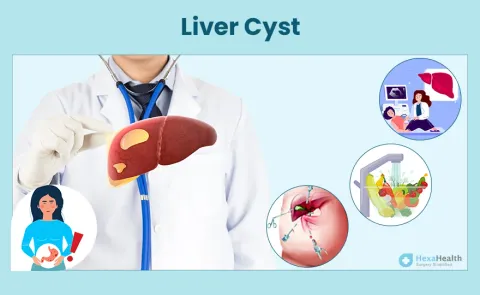
No, most simple liver cysts do not need treatment. If a cyst looks harmless, causes no symptoms, and has no concerning features, doctors may recommend observation instead of surgery or drainage. Treatment is usually considered when a cyst causes significant symptoms or complications.
Also read:What Happens During a Primary Biliary Cirrhosis Liver Transplant?
What Happens If a Liver Cyst Does Not Need Treatment?
Usually, nothing dramatic happens.
Your healthcare provider may simply explain that the cyst appears benign and does not need treatment.
The exact follow-up plan depends on the cyst’s characteristics and your overall health.
Current ACG guidance says asymptomatic simple hepatic cysts generally do not require routine surveillance.
If your doctor recommends follow-up imaging anyway, follow the plan they give you because your individual circumstances may differ.
How Are Symptomatic Liver Cysts Treated?
Treatment is considered when a cyst causes significant symptoms or creates a complication.
Possible approaches include:
- Cyst aspiration
- Aspiration with sclerotherapy
- Surgical fenestration or deroofing
- Partial liver surgery in selected situations
- Other specialized procedures depending on the diagnosis
The American College of Gastroenterology’s updated guidance suggests cyst fenestration or aspiration with sclerotherapy for symptomatic simple hepatic cysts.
The best treatment depends on the cyst’s location, size, symptoms, recurrence risk, and the expertise available.
What Is Liver Cyst Aspiration?
Aspiration involves inserting a needle into the cyst and removing its fluid.
This can reduce pressure and improve symptoms.
However, simply draining a cyst does not always prevent it from coming back.
That is why aspiration alone may not provide a permanent solution for some simple cysts.
In selected patients, doctors may combine drainage with sclerotherapy, which is intended to reduce the chance of the cyst refilling.
What Is Liver Cyst Fenestration?
Fenestration, sometimes called deroofing, involves opening the cyst and removing part of its wall so that it can collapse and drain.
It is a treatment option for selected symptomatic simple liver cysts.
The exact procedure depends on the cyst and the patient’s health.
Some procedures can be performed using minimally invasive surgical techniques.
Can Liver Cysts Go Away on Their Own?
Some cysts may remain stable for years, while others can change in size.
There is no universal rule that every liver cyst will disappear.
The more important question is whether the cyst is stable, clearly benign, and causing problems.
A simple cyst that causes no symptoms may not need to be removed simply because it remains present.
Are Liver Cysts Common?
Simple liver cysts are not rare.
Many are discovered incidentally because modern imaging can detect small abnormalities that previously would have gone unnoticed.
Cleveland Clinic describes simple liver cysts as common and notes that nearly all liver cysts are benign.
The discovery of a cyst therefore does not automatically indicate serious liver disease.
Are Liver Cysts More Common in Women?
Some forms of liver cystic disease are more common or more severe in women.
This is particularly relevant to polycystic liver disease and liver cysts associated with ADPKD.
Hormonal factors, including estrogen, may influence cyst growth in some inherited cystic conditions. NIDDK notes that women with ADPKD are more likely to develop liver cysts and that estrogen may affect cyst growth.
This does not mean that every woman with a liver cyst has a genetic condition.
A single simple liver cyst can occur without polycystic disease.
Can Liver Cysts Affect Liver Function?
Most simple liver cysts do not affect liver function.
The liver contains a large amount of functional tissue, and a small isolated cyst generally does not interfere with its work.
Severe polycystic liver disease is different. In rare advanced cases, a very large cyst burden can affect liver function or cause major pressure-related problems.
Therefore, the presence of one cyst should not be confused with liver failure.
Can Liver Cysts Cause Liver Failure?
A typical simple liver cyst does not cause liver failure.
Severe liver problems are more likely to occur in uncommon conditions involving extensive cystic disease or another underlying liver disorder.
This is an important distinction because many people see the word “liver” on an imaging report and immediately worry that the cyst means their liver is failing.
A simple hepatic cyst is not the same as liver failure.
Are Liver Cysts Dangerous During Pregnancy?
A simple liver cyst does not automatically make pregnancy dangerous.
However, pregnancy and hormonal changes may influence some types of cystic liver disease, especially polycystic liver disease.
If you have a known liver cyst and are pregnant or planning pregnancy, discuss it with your healthcare professional, particularly if you have multiple liver cysts, kidney cysts, or a known inherited condition.
Individual advice depends on the type and size of the cyst.
Can Diet Shrink Liver Cysts?
There is no proven diet that reliably makes a simple liver cyst disappear.
You may see online claims about special foods, juices, herbs, cleanses, or supplements that supposedly dissolve liver cysts.
These claims should be approached carefully.
A healthy eating pattern can support general liver health, but it should not be presented as a proven treatment for a structural liver cyst.
If a cyst is causing symptoms, medical evaluation is more useful than relying on an unproven “cyst-cleansing” diet.
What Should You Eat If You Have a Liver Cyst?
If your doctor has diagnosed a simple liver cyst, you usually do not need a special liver cyst diet.
A balanced eating pattern is generally a sensible choice for overall health.
This can include:
- Vegetables
- Fruits
- Whole grains
- Beans and lentils
- Lean sources of protein
- Fish
- Nuts and seeds
- Healthy fats
- Adequate water
It is also reasonable to limit highly processed foods and excessive added sugar.
Alcohol should be discussed based on your overall health and any other liver conditions you may have.
The key point is that diet supports overall health but does not replace evaluation of a cyst that has concerning features.
Should You Avoid Alcohol With a Liver Cyst?
A simple liver cyst by itself does not necessarily mean that alcohol must be completely avoided.
However, excessive alcohol can damage the liver and contribute to other liver conditions.
If you have fatty liver disease, hepatitis, cirrhosis, abnormal liver enzymes, or another liver problem in addition to the cyst, your alcohol recommendations may be different.
Ask your healthcare professional what is appropriate for your situation.
Can Exercise Make a Liver Cyst Worse?
Normal physical activity is generally not considered a problem for someone with an uncomplicated simple liver cyst.
However, if you have a very large cyst, significant abdominal symptoms, polycystic liver disease, or another condition affecting the liver, your doctor may give you specific advice.
Do not assume that exercise must be stopped simply because an imaging test found a small cyst.
When Should You See a Doctor About a Liver Cyst?
You should discuss the finding with your healthcare professional if you have been told that you have a liver cyst, particularly if you do not understand what type it is.
Prompt medical evaluation is especially important if you develop:
- Severe or sudden abdominal pain
- Fever
- Chills
- Persistent vomiting
- Yellow skin or eyes
- Significant abdominal swelling
- Fainting or severe weakness
- New shortness of breath
- Rapidly worsening symptoms
These symptoms do not prove that a liver cyst is dangerous, but they can indicate a complication or another condition that needs attention.
What Questions Should You Ask Your Doctor?
If your imaging report found a liver cyst, consider asking:
- Is this a simple liver cyst?
- How large is it?
- Where is it located?
- Does it have any concerning features?
- Does it explain my symptoms?
- Do I need another imaging test?
- Do I need a CT or MRI?
- Do I need follow-up imaging?
- Does the cyst require treatment?
- Could I have more than one cystic condition?
- Do I need evaluation of my kidneys?
- What symptoms should make me seek urgent care?
Having these questions ready can make a medical appointment more useful.
What Does “Incidental Liver Cyst” Mean?
“Incidental” means the cyst was found unexpectedly while doctors were looking for something else.
For example, a person might have an abdominal CT scan because of pain or another concern. The scan may show a small liver cyst that was unrelated to the original reason for the test.
Incidental findings are common with modern medical imaging.
The word “incidental” does not mean “dangerous.”
It often means that the finding was discovered by chance.
Does a Liver Cyst Mean You Have Liver Disease?
Not necessarily.
A simple liver cyst can exist in someone whose liver is otherwise healthy.
This is an important distinction.
Liver disease can include conditions such as fatty liver disease, viral hepatitis, cirrhosis, autoimmune liver diseases, and other disorders.
A simple cyst is a structural finding and does not automatically indicate that the liver is damaged.
What Is a Parasitic Liver Cyst?
Some liver cysts are caused by parasites.
One important example is echinococcosis, also called hydatid disease.
It is caused by infection with Echinococcus parasites and is different from an ordinary simple liver cyst.
The infection can produce characteristic cystic structures and may require specialized treatment.
The risk is influenced by exposure history and geographic factors.
If imaging suggests a parasitic cyst, treatment should be planned by an appropriate medical team rather than treating it as an ordinary simple cyst.
Why Doctors Do Not Always Drain Liver Cysts
It may seem logical to drain a cyst as soon as it is discovered.
But if the cyst is harmless and causing no symptoms, drainage may provide no benefit and can expose a person to unnecessary risks.
The American College of Gastroenterology specifically recommends against aspiration of asymptomatic simple hepatic cysts.
This is a good example of why “doing more” is not always better medical care.
The goal is to treat problems that need treatment while avoiding unnecessary procedures for findings that are unlikely to cause harm.
Can a Liver Cyst Grow?
Yes, some liver cysts can increase in size.
Growth does not automatically mean cancer.
Some benign cysts can become larger and eventually cause pressure-related symptoms.
Doctors consider growth together with imaging appearance, symptoms, and other clinical information.
If your healthcare professional recommends follow-up imaging, the purpose may be to understand how the lesion behaves over time.
What Is the Outlook for Someone With a Liver Cyst?
For someone with a typical simple liver cyst, the outlook is usually excellent.
Most people do not develop serious complications.
Many never need treatment.
For people with symptomatic cysts, effective treatments are available.
For people with polycystic liver disease or other unusual cystic conditions, long-term management may be more involved.
The prognosis therefore depends on the specific diagnosis rather than simply the word “cyst.”
The Most Important Thing to Remember About Liver Cysts
If you have recently been told that you have a liver cyst, it is understandable to feel worried.
But the discovery of a liver cyst does not automatically mean cancer, liver failure, or a dangerous disease.
The majority of simple liver cysts are benign and do not require treatment.
The most useful next step is to find out exactly what your imaging report says.
A report describing a simple hepatic cyst is generally reassuring.
A report describing a complex cystic lesion, internal nodules, thick walls, septations, or other unusual characteristics deserves further discussion with a healthcare professional.
In other words, the word “cyst” is only the beginning of the evaluation.
Final Thoughts
So, are liver cysts dangerous? In most cases, no. A simple liver cyst is usually a benign, fluid-filled sac that does not cause symptoms, damage the liver, or require treatment. The situation becomes more important when a cyst is large, symptomatic, infected, ruptured, associated with polycystic liver disease, or has unusual features on imaging. The safest approach is not to panic and not to ignore the finding. Instead, understand what type of cyst you have, review the imaging results with your healthcare professional, and follow the recommended plan. Current medical guidance supports observation rather than routine treatment for asymptomatic simple hepatic cysts, while cysts with concerning features or significant symptoms may require additional imaging or treatment.
Frequently Asked Questions About Liver Cysts
Can stress cause liver cysts?
Stress is not considered a typical cause of simple liver cysts. A liver cyst generally develops for structural, genetic, developmental, infectious, or other medical reasons rather than because of everyday emotional stress.
Can a liver cyst affect your sleep?
A small, uncomplicated cyst usually does not affect sleep. A large cyst that causes persistent abdominal pressure or pain could make certain sleeping positions uncomfortable. If pain repeatedly interferes with sleep, discuss it with your healthcare professional rather than assuming the cyst is responsible.
Can a liver cyst cause back pain?
A large liver cyst may cause discomfort that is felt in nearby areas, but back pain has many possible causes. Muscle problems, spinal conditions, kidney problems, gallbladder disease, and digestive disorders can also cause back or upper abdominal discomfort. Persistent back pain should therefore be evaluated rather than automatically attributed to a liver cyst.
Can a liver cyst affect blood test results?
A simple liver cyst usually does not cause abnormal liver blood tests. If liver enzymes or other tests are abnormal, your healthcare professional may look for another explanation or determine whether the cyst is part of a broader liver condition.
Is having multiple liver cysts always dangerous?
No. Multiple liver cysts do not automatically mean that the condition is dangerous. However, several cysts may lead doctors to consider conditions such as polycystic liver disease, particularly if there are also kidney cysts or a family history of inherited cystic disease. The number, size, appearance, symptoms, and overall medical history all matter.

Key Takeaways Living alone can be safe when daily routines, [...]
Atlanta patients often receive care from large hospital systems, neighborhood [...]
Diagnostic Precision and Risk Stratification in Modern Urology The foundation [...]

Key Takeaways A recurring SUV problem should be documented from [...]

A printed guide succeeds when it helps someone complete a [...]

Key Takeaways An arrest or citation is an allegation, not [...]

When you ask, "What is the best payroll provider for [...]
Key Takeaways Brief, regular check-ins can help families notice stress [...]