
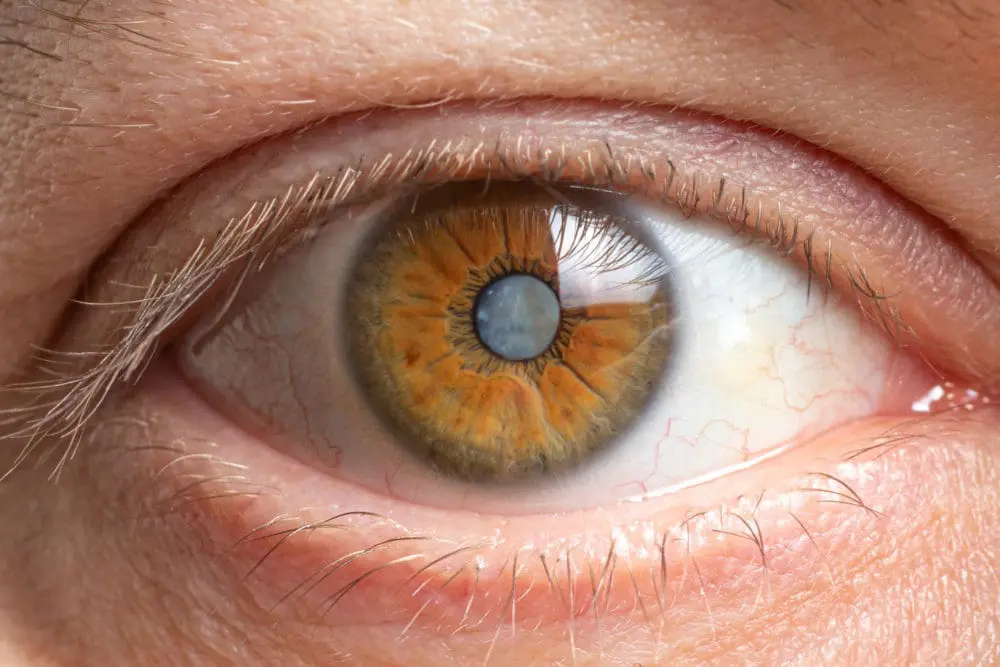
A cataract is the clouding of the natural lens inside the eye, which leads to blurred or decreased vision. As this cloudiness progresses, it can interfere with daily activities like reading, driving, or recognizing faces. When vision impairment from cataracts can’t be corrected with glasses or contact lenses, surgery may be recommended to restore clarity. Here’s information on traditional and laser cataract surgery methods:
Why Cataracts Occur
Cataracts are a common part of the aging process. The lens inside the eye is primarily made of water and protein, and the proteins are arranged in a precise way that keeps the lens clear and allows light to pass through it. These proteins may begin to clump together over time, forming a cloudy area on the lens that creates a cataract.
While cataracts can develop at any age, they are most prevalent in older adults. Other factors can also increase the risk of developing cataracts, such as:
- Certain Medical Conditions (Like Diabetes)
- Exposure To Ultraviolet Sunlight
- Previous Eye Injuries or Surgeries
When surgical interventions are necessary, cataract surgery removes the clouded lens and replaces it with an artificial intraocular lens (IOL) to improve vision.
How Traditional Surgery Works
Traditional cataract surgery, also known as phacoemulsification, is a well-established procedure. During this method, the surgeon makes a small incision in the cornea using a scalpel. A small, circular opening is then made in the lens capsule. The lens cap is the thin membrane that holds the natural eye lens in place.
Once the capsule is open, the surgeon inserts a small probe that emits high-frequency ultrasound waves. These waves break the clouded lens into small fragments, and the surgeon then suctions these pieces out of the eye. After the cataract is completely removed, the surgeon inserts a folded intraocular lens through the corneal incision and positions it correctly within the lens capsule. In most cases, the small incision is self-sealing and does not require stitches.
How Laser-assisted Surgery Works
Laser-assisted cataract surgery uses advanced femtosecond laser technology to perform several procedural steps with high precision. Before the surgery begins, a specialized imaging system maps the unique structures of the patient’s eye with a computer program. This detailed map guides the laser through several key surgical steps.
Laser-assisted cataract surgery uses the laser to create the initial corneal incisions for greater accuracy, and laser surgery methods can also be used to create an astigmatism-correcting incision if needed. By using a computer-guided laser, this surgical method provides precise information about the incision’s location, depth, and size. The laser then makes the circular opening in the lens capsule to remove the natural lens and place the new IOL.
Once the laser incision is made, the laser also softens and fragments the cataract, allowing for its gentle removal with an ultrasound energy probe. The surgeon then implants the new IOL. Stitches are commonly not needed for laser-assisted surgery incisions as well.
How Laser-assisted Surgery Benefits Patients
Laser-assisted cataract surgery offers several advantages due to its fine precision. The laser’s ability to create perfectly shaped and centered incisions can contribute to more predictable visual outcomes, particularly for patients receiving IOLs designed to correct astigmatism or presbyopia. The laser-guided opening in the lens capsule helps the new lens be perfectly centered, encouraging optimal vision performance after recovery. By also pre-softening the cataract, the laser allows surgeons to use less ultrasound energy to remove the lens.
Schedule a Cataract Surgery Consultation
Traditional and laser-assisted methods are effective procedures for removing cataracts and restoring sight. The most suitable approach depends on several factors, including your specific visual needs, your eye’s health, and the surgeon’s personalized recommendation. To learn about your eye health, contact an ophthalmologist for a comprehensive eye examination today.
- Responsible AI and Data Governance in Financial Services: A Practical Guide for the U.S. Virgin Islands
- How To Build A Strong Personal Injury Claim In Pennsylvania
- A Practical Safety Plan for Older Adults Living Alone
- 10 Examples Of Medical Malpractice That Patients Should Know
- Innovations in Advanced Urology Treatments

Key Takeaways Reliable financial AI depends on accurate, traceable, well-permissioned [...]

Key Takeaways Put safety and medical care ahead of evidence [...]

Key Takeaways Living alone can be safe when daily routines, [...]
Atlanta patients often receive care from large hospital systems, neighborhood [...]
Diagnostic Precision and Risk Stratification in Modern Urology The foundation [...]

Key Takeaways A recurring SUV problem should be documented from [...]

A printed guide succeeds when it helps someone complete a [...]

Key Takeaways An arrest or citation is an allegation, not [...]