
Plantar fasciitis affects the tissues in the feet and often causes persistent heel pain. It involves the plantar fascia, a thick band of tissue running from the heel to the toes. Stress on this band can create small tears, which lead to inflammation, and repetitive stress frequently contributes to the condition. Individuals may experience heel pain or discomfort that stretches through the arch, and symptoms often worsen after activity rather than during it. Many people have reduced flexibility in the foot, and simple movements such as walking may become uncomfortable without appropriate management.
Identifying Plantar Fasciitis
Certain physical attributes and lifestyle choices increase the likelihood of developing plantar fasciitis. Carrying excess weight puts additional stress on the plantar fascia, and high arches or flat feet can create mechanical imbalances. Age is another factor, as plantar fasciitis occurs more often in people over 40. Occupations that involve prolonged standing, including teaching, factory work, and construction, increase risk.
Participation in sports that place repeated pressure on the heel, such as running, ballet, or soccer, may also contribute. A healthcare provider diagnoses plantar fasciitis through medical history and a physical exam, and pressing on tender areas often helps determine the source of pain. Imaging tests such as X-rays or MRI may be ordered when another cause, like a stress fracture, is suspected.
Applying Conservative Treatments
Most cases are managed through non-invasive methods that relieve symptoms and support healing. Orthotics are custom-made shoe inserts that correct mechanical imbalances and help reduce stress on the plantar fascia. Stretching exercises for the Achilles tendon and plantar fascia may improve flexibility, and icing the affected area can help manage inflammation. Over-the-counter pain relievers may also reduce discomfort, and activity modifications can limit strain on the foot. A comprehensive foot evaluation often includes a gait analysis, and the doctor can use this information to develop an individualized plan.
Utilizing Medical Interventions
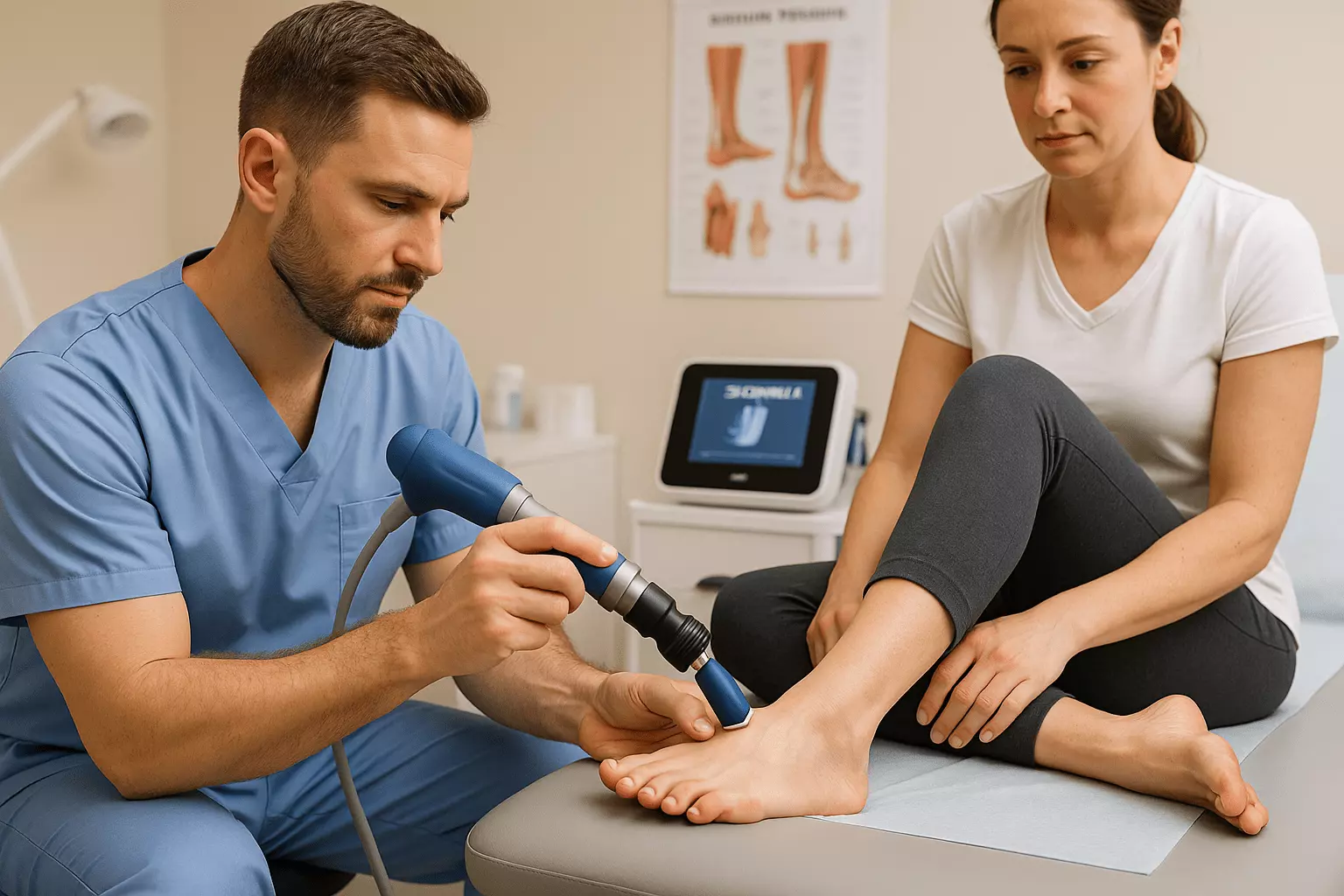
If conservative treatments do not improve symptoms, healthcare providers may recommend advanced procedures. Extracorporeal shock wave therapy (ESWT) delivers sound waves into injured tissues to stimulate healing without surgery. Radial pulse therapy (RPT) uses low-energy waves to promote tissue repair, and cryotherapy targets damaged nerve fibers while sparing surrounding tissue. In some cases, surgical release of a portion of the plantar fascia is performed when other treatments fail.
Healthcare providers evaluate each patient to determine the most appropriate intervention. Factors such as the severity of pain, duration of symptoms, and response to previous treatments guide these decisions, and providers may combine multiple therapies to improve outcomes. Follow-up appointments allow clinicians to monitor progress, and adjustments to the treatment plan can be made if symptoms persist or worsen. Education about proper footwear, stretching techniques, and activity modification often accompanies these interventions, so patients have clear guidance for managing daily activities. Monitoring and consistent care help support healing while reducing the risk of further stress on the plantar fascia.
Find a Clinic
Managing plantar fasciitis involves identifying risk factors and using appropriate treatments. Patients must address elements such as weight, footwear, and activity to reduce stress on the foot. Diagnosis relies on physical examination, medical history, and, when needed, imaging tests to identify underlying causes. Both nonsurgical and surgical interventions are available, and treatment plans are tailored to individual needs. Symptom management, mechanical support, and medical interventions together aim to restore foot function and reduce discomfort. Early evaluation and proper care improve symptom management and support ongoing foot health.
- Responsible AI and Data Governance in Financial Services: A Practical Guide for the U.S. Virgin Islands
- How To Build A Strong Personal Injury Claim In Pennsylvania
- A Practical Safety Plan for Older Adults Living Alone
- 10 Examples Of Medical Malpractice That Patients Should Know
- Innovations in Advanced Urology Treatments

Key Takeaways Reliable financial AI depends on accurate, traceable, well-permissioned [...]

Key Takeaways Put safety and medical care ahead of evidence [...]

Key Takeaways Living alone can be safe when daily routines, [...]
Atlanta patients often receive care from large hospital systems, neighborhood [...]
Diagnostic Precision and Risk Stratification in Modern Urology The foundation [...]

Key Takeaways A recurring SUV problem should be documented from [...]

A printed guide succeeds when it helps someone complete a [...]

Key Takeaways An arrest or citation is an allegation, not [...]