
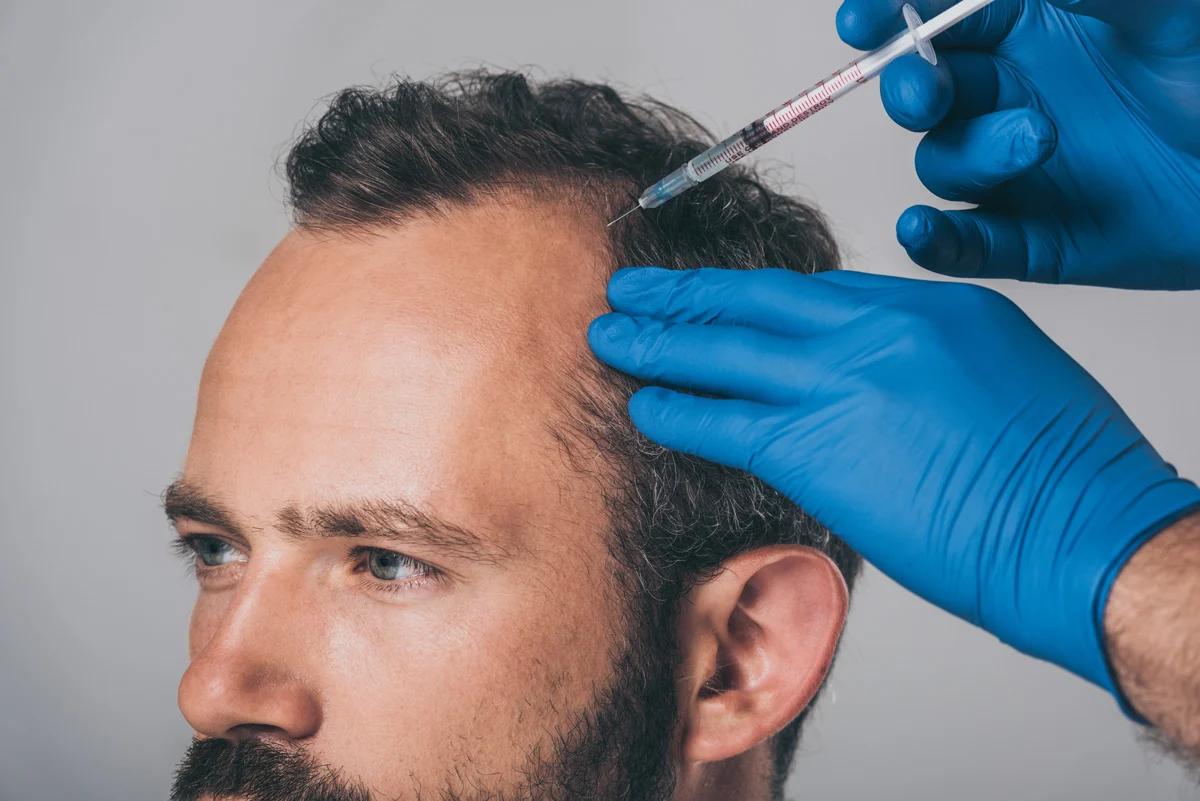
Hair restoration has seen technological advancements, and these developments offer new methods for addressing hair loss. The field continues to evolve with refined techniques. The options include surgical procedures, cellular therapies, and medical treatments, each of which presents distinct benefits, risks, and suitability depending on the individual’s specific condition. While these options exist, individual results can vary, so consult a professional.
Advancements in Hair Restoration
Surgical options for hair restoration have improved. Follicular Unit Transplant (FUT) is one established method. It involves removing a strip of tissue. This technique often allows many grafts to be transplanted in one session and may suit significant hair loss. Follicular Unit Extraction (FUE) is another technique, one that involves harvesting individual follicular units directly from the scalp. FUE avoids a linear scar, benefits those who prefer short hair, and recovery time is shorter. Both methods require evaluation by a professional, and donor hair, scalp flexibility, and goals are factors in selection. FUE and FUT have distinct advantages, so researching both options thoroughly before making a decision is recommended.
Post-operative care plays a role in the success of both FUT and FUE hair restoration procedures. Patients are advised to avoid strenuous activities, so protect the scalp from sun, and follow prescribed medications to promote healing. It is not uncommon to experience temporary shedding of transplanted hairs, known as “shock loss,” which is a normal part of the process as the grafted follicles adjust to their new location. Over the following months, patients can expect gradual hair growth. The full results become evident within 12 to 18 months. Consulting with an experienced surgeon is important, and following the recommended aftercare instructions will help you achieve optimal outcomes.
Exploring Cellular Approaches
Cellular therapies are an area of ongoing development, and ACell Therapy is one example in this category. It uses a product derived from animal tissue. This product is applied during a procedure, and proponents believe it supports tissue regeneration. The mechanism involves creating a scaffold that encourages the body’s natural healing processes and may promote the growth of new hair follicles in targeted areas. ACell® Therapy is sometimes combined with hair transplantation techniques to potentially improve graft survival and overall outcomes for certain patients. Because research is still exploring its full potential, discussing this option with a specialist is advised.
Medical Treatment Options
Medications provide a non-surgical approach. Propecia is an oral medication for men. It works by blocking the formation of a hormone linked to hair loss. This treatment requires a prescription, and it must be taken continuously to maintain its effects. Like all medications, potential side effects exist, which a doctor can explain before you start treatment. Because ongoing medical supervision is recommended when using Propecia, doctors need to monitor for adverse reactions and assess the effectiveness of the therapy. Taking the medication long-term is necessary since stopping it often leads to the return of hair loss over time. Regular follow-ups support both safety and management.
Your Next Steps
Understanding your options is the first step. Seek professional guidance, and a qualified specialist can provide a detailed evaluation. This will help you understand which approach may be suitable, especially if you have specific needs that must be addressed. Book a consultation to receive personalized information.
- Responsible AI and Data Governance in Financial Services: A Practical Guide for the U.S. Virgin Islands
- How To Build A Strong Personal Injury Claim In Pennsylvania
- A Practical Safety Plan for Older Adults Living Alone
- 10 Examples Of Medical Malpractice That Patients Should Know
- Innovations in Advanced Urology Treatments

Key Takeaways Reliable financial AI depends on accurate, traceable, well-permissioned [...]

Key Takeaways Put safety and medical care ahead of evidence [...]

Key Takeaways Living alone can be safe when daily routines, [...]
Atlanta patients often receive care from large hospital systems, neighborhood [...]
Diagnostic Precision and Risk Stratification in Modern Urology The foundation [...]

Key Takeaways A recurring SUV problem should be documented from [...]

A printed guide succeeds when it helps someone complete a [...]

Key Takeaways An arrest or citation is an allegation, not [...]