
Key Takeaways
- Choose based on the player’s goals and daily routine, not just appearance or brand.
- Measure the piano area, bench clearance, walkways, and complete the delivery route.
- Compare acoustic, digital, and hybrid instruments according to Utah home life, space, and volume needs.
- Test key action, tone, pedals, and bench comfort before making a final choice.
- Budget for delivery, service, accessories, maintenance, and possible moving costs.
- For acoustic pianos, stable indoor conditions matter in Utah’s dry climate and changing seasons.
Table of Contents
- Start With Your Musical Goals
- Compare Acoustic, Digital, and Hybrid Pianos
- Measure Your Utah Space Before Shopping
- Test Touch, Tone, and Comfort
- Build a Practical 2026 Budget
- Choose Between New and Pre-Owned
- Plan for Care and Maintenance
- Use a Piano Buying Checklist
- Common Piano Buying Questions
- Choose the Piano That Fits Real Life in Utah
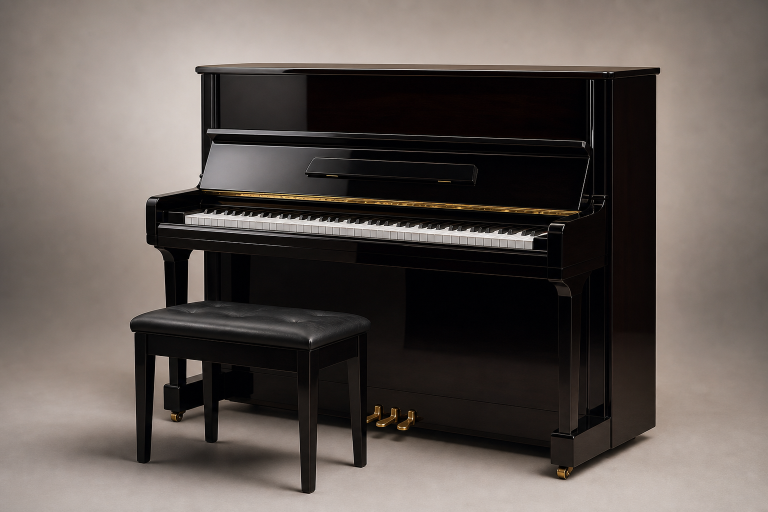
Buying a piano is an exciting milestone, whether it will become the centerpiece of a Salt Lake City living room, a practice instrument in a Provo apartment, or a family gathering place in a Wasatch Front home. The best choice is not automatically the biggest or most expensive instrument. It is the piano that fits the player, the room, and the household’s real routine.
Before comparing finishes, brands, or special features, start by visiting piano stores Utah shoppers can use to experience different instruments in person. Hearing and feeling several options side by side makes it easier to recognize the difference between an instrument that is merely acceptable and one that encourages someone to sit down and play every day.
1. Start With Your Musical Goals
A beginner taking weekly lessons has different needs from a returning adult player, a serious high school musician, or a family that wants music available for everyone. Think about who will play, how often they will practice, and whether quiet headphone practice is important. Classical students may prioritize nuanced control and a traditional action, while pop, jazz, and songwriting players may value built-in sounds, recording functions, and portability.
It also helps to consider the long view. A modest digital piano may be an excellent first step for a child in a condominium, while a committed player with a dedicated music room may prefer an acoustic upright that can remain in the home for decades. For a helpful overview of the instrument’s traditional construction and major forms, see this piano reference guide.
2. Compare Acoustic, Digital, and Hybrid Pianos
Each piano category can be the right answer, but they solve different problems.
- Acoustic pianos: Uprights and grands use strings, hammers, and a soundboard to create their sound. They offer natural resonance and expressive response, but need regular tuning, professional moving, and a stable environment.
- Digital pianos: These are practical for apartments, shared homes, and families with irregular schedules. Headphones, adjustable volume, recording tools, and easier relocation are major advantages. Key action and speaker quality should be tested carefully.
- Hybrid pianos: Hybrids combine acoustic-style action or design with digital sound technology. They can provide a highly satisfying playing experience, though they often require a larger investment than entry-level digital models.
3. Measure Your Utah Space Before Shopping
Floor dimensions are only the beginning. Leave room for a bench, comfortable arm movement, a player getting on and off the bench, and clear paths through the room. In a smaller Utah townhome or apartment, a slim digital piano or compact upright can protect living space while still supporting serious practice.
A Simple Measuring Process
- Mark the proposed piano footprint on the floor with painter’s tape.
- Add the bench position and at least a comfortable walking path behind it.
- Measure doors, hallways, stairs, elevators, landings, and tight turns from the entrance to the room.
- Check for vents, fireplaces, direct afternoon sun, exterior doors, and large windows.
- Take photos and measurements with you when shopping.
Acoustic instruments should not sit directly beside heating or cooling vents, fireplaces, or areas with sharp temperature changes. Utah’s low humidity and seasonal shifts can make consistent indoor conditions especially important. The Utah Climate Center offers useful local context for understanding the state’s varied climate conditions.
4. Test Touch, Tone, and Comfort
Specifications cannot tell the whole story. Play familiar music slowly and at different volumes, then listen for evenness across the keyboard. Try soft notes, repeated notes, fast passages, and full chords. A good piano should feel controllable, not tiring or unpredictable.
- Check that every key responds consistently.
- Listen for clarity in the treble and fullness in the bass.
- Test all pedals and make sure they are comfortable to reach.
- Adjust the bench height, if possible, to confirm relaxed posture.
- For digital models, test both speakers and headphones.
5. Build a Practical 2026 Budget
Set a total budget rather than focusing only on the listed price. Delivery, setup, a bench, headphones, lighting, and protective accessories can all affect the final amount. Acoustic buyers should also reserve funds for tuning, regulation, voicing, and future repairs. Digital buyers may need a stable stand, pedal unit, upgraded speakers, or software-related accessories.
Ask whether delivery and setup are included, what the warranty covers, and whether service is available locally. If a move is likely within the next few years, factor that cost into the decision. A piano that fits the budget comfortably is more likely to remain a source of enjoyment than a financial strain.
6. Choose Between New and Pre-Owned
New pianos provide a known history, current warranty terms, and predictable condition. Pre-owned instruments can offer excellent value, especially when a buyer can purchase a higher-quality model within the same budget. Still, an older acoustic piano should be inspected by a qualified technician who can assess the soundboard, bridges, strings, pinblock, action, and overall structural condition.
Used digital pianos deserve inspection, too. Test every key, pedal, speaker, screen, button, port, and power connection. Confirm that replacement parts are available before committing to an older model.
7. Plan for Care and Maintenance
Acoustic pianos need periodic tuning and benefit from stable humidity and temperature. Keep drinks, plants, pets, and heavy objects away from the instrument. Dust digital pianos gently, protect cables, and use only manufacturer-approved cleaning methods. For either type, professional movers are usually the safer choice when stairs, snow, narrow entrances, or long-distance Utah moves are involved.
8. Use a Piano Buying Checklist
- Define the player’s goals and must-have features.
- Measure the room and the full delivery path.
- Set a total purchase and ownership budget.
- Play several instruments using familiar music.
- Test every key, pedal, and digital function.
- Ask about delivery, warranty, return policies, and local service.
- Arrange an independent inspection for a pre-owned acoustic piano.
9. Common Piano Buying Questions
Is an acoustic piano better than a digital piano?
Neither is universally better. Acoustic pianos provide traditional resonance and mechanical response, while digital pianos offer volume control, headphones, and easier maintenance. The better choice depends on the home, budget, and player.
How much space does a piano need?
The piano needs more than its physical footprint. Include bench space, walking clearance, sound considerations, safe placement, and an accessible delivery route.
Is buying a used piano a good idea?
Yes, if its condition is verified. A pre-owned piano can be a smart value, but acoustic instruments should be examined by a piano technician before purchase.
Choose the Piano That Fits Real Life in Utah
The ideal piano supports regular playing without overwhelming the room, budget, or household routine. Measure carefully, test patiently, consider Utah’s indoor conditions, and include long-term care in the decision. When an instrument feels inviting and manageable from the first day, it has a much better chance of becoming part of everyday life.

Key Takeaways Put safety and medical care ahead of evidence [...]
Key Takeaways Living alone can be safe when daily routines, [...]
Atlanta patients often receive care from large hospital systems, neighborhood [...]
Diagnostic Precision and Risk Stratification in Modern Urology The foundation [...]

Key Takeaways A recurring SUV problem should be documented from [...]

A printed guide succeeds when it helps someone complete a [...]

Key Takeaways An arrest or citation is an allegation, not [...]

When you ask, "What is the best payroll provider for [...]