
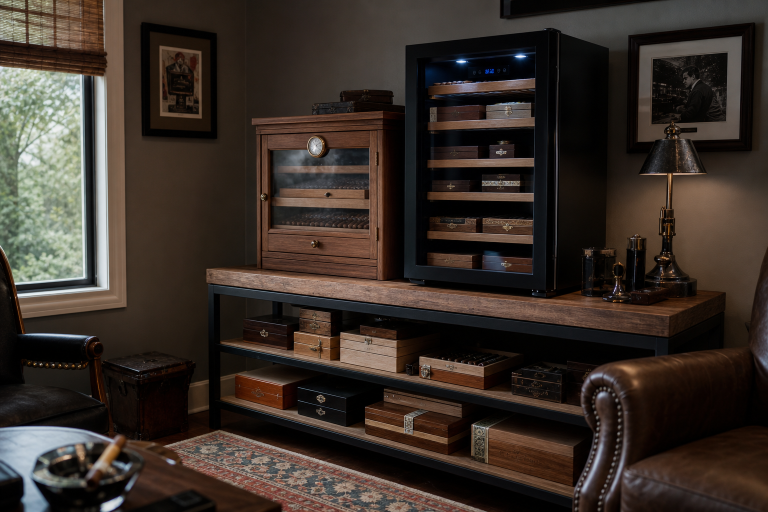
Key Takeaways
- Steady storage conditions matter more than hitting one exact humidity reading.
- Humidity, temperature, sunlight, and airflow all influence cigar condition.
- Digital readings can reveal a problem before wrappers crack or cigars become spongy.
- A shaded, temperature-stable location is as important as the storage container.
- Slow corrections protect cigars better than dramatic changes.
Great cigars are easier to enjoy when they have been kept in calm, consistent conditions. Whether you own a few favorites or a growing collection, the goal is not to chase a perfect number every hour. It is to limit the heat, dryness, excess moisture, and abrupt changes that can affect flavor, construction, and burn. A smart cigar humidifier can make routine monitoring easier for collectors who want more visibility over their storage environment.
The most dependable setup is usually the one that matches your collection size and daily habits. A well-sealed container, sensible humidity control, a reliable hygrometer, and a stable room location will do more for your cigars than constant adjustments. Small checks made consistently are far easier than rescuing cigars after weeks of neglect.
Why Stable Storage Matters
Cigars exchange moisture with the air around them. In overly dry conditions, wrappers can become brittle, cigars may burn hot or fast, and the flavor can feel sharper than intended. Too much moisture may make lighting difficult, encourage uneven burns, and create a musty environment. Sudden swings are especially troublesome because the wrapper, filler, and binder do not respond at exactly the same pace.
A collection stored beside a sunny window can face far more stress than one kept in a shaded interior room, even when both are in the same home. A basic humidity-controlled container for storing cigars helps create a protected microclimate, but it still depends on good placement and routine maintenance.
The Main Conditions To Watch
Relative Humidity
Relative humidity, often shown as RH, describes how much moisture is in the air compared with the maximum it could hold at that temperature. Many cigar owners prefer a setting somewhere from the mid-60s to the low 70s RH. The best point can vary with cigar construction, personal taste, local climate, and whether cigars are being held for a week or aged for months. A stable 67 percent is often more useful than a reading that jumps repeatedly between 63 and 73 percent.
Temperature
Warm storage makes humidity harder to manage and can increase the risk of unwanted moisture problems. Choose a cool, consistent indoor space away from vents, radiators, appliances, garages, and direct sunlight. Avoid treating a refrigerator or wine cellar as an automatic solution, since cold environments can alter how cigars age and can introduce other storage challenges.
Air Movement And Light
Strong drafts and frequent openings make internal conditions less predictable. Keep the container closed except when selecting cigars or performing a planned check. Bright light can heat a box or cabinet quickly, so a closet shelf, office cabinet, or shaded room is generally more suitable than a windowsill.
Choosing A Storage Method
There is no single right storage system. Traditional wooden humidors appeal to collectors who value appearance, Spanish cedar, and hands-on care. Airtight plastic containers can be practical, affordable choices when paired with a dependable humidity source. Travel cases work well for a short trip or event, while electronic storage systems suit larger collections or owners who want automatic control and alerts. When comparing options, consider seal quality, usable capacity, ease of cleaning, and how often you will need access.
For a broader overview of container choice, temperature, and longer-term care, guidance on how to properly store cigarscan help place your home routine in context.
How To Set Up A Reliable Storage Routine
- Choose the location. Start with a shaded area where the room temperature stays relatively steady.
- Prepare the container. Follow the manufacturer’s instructions, especially when setting up a new wooden humidor.
- Check the hygrometer. Use a dependable digital device and compare readings over several days before making major changes.
- Add a controlled humidity source.Two-way humidity products are convenient because they can add or absorb moisture within their intended range.
- Let conditions settle. Give the empty or lightly loaded container time to stabilize before filling every available space.
- Load with breathing room. Do not pack cigars so tightly that you cannot inspect or rotate them easily.
- Record the first readings. A simple note on humidity and temperature makes future drift easier to spot.
How To Monitor Without Overcorrecting
Check readings on a schedule instead of opening the container several times a day. During the first few weeks, a brief log can show whether an unusual reading is a genuine trend or a one-time fluctuation. Compare numbers with what you can observe: a cigar that feels fragile may need gradual recovery, while one that feels unusually soft may point to excess humidity or a faulty reading.
Replace or refresh humidity materials before they are depleted, but avoid adding large amounts of water to solve a small dip. A slow, measured adjustment gives the tobacco time to equalize and reduces the chance of overshooting your target.
Common Storage Problems And Their Causes
Cigars Feel Too Dry
Low room humidity, a poor seal, frequent opening, or an exhausted humidity source are common causes. Rehydrate slowly by restoring a steady environment rather than applying moisture directly to the cigars. Rapid rehydration can split wrappers and leave the outer leaf feeling better before the filler has recovered.
Cigars Feel Too Soft Or Reading’s Swing
Excess humidity may come from an overactive moisture source, a leak, cramped storage, or heat. First, verify the hygrometer, inspect the seal, and consider whether the container has too much empty space or too many cigars packed together. A smaller, well-sealed setup is often easier to control than a large box that is mostly empty.
Musty Smells Or Visible Growth
Treat possible mold seriously. Separate affected cigars, inspect the remaining collection, and clean the storage area before returning unaffected cigars. Do not simply cover the smell with cedar or fragrance, because the underlying moisture issue still needs correction.
Seasonal Care And Smart Monitoring
Winter heating can dry indoor air quickly, while summer heat and humidity can push a storage area in the opposite direction. During storm season, power interruptions can affect electronic equipment, so keep a manual hygrometer available and avoid opening the main collection unnecessarily. For travel, use a smaller sealed case rather than repeatedly accessing your primary storage.
Smart monitoring makes the most sense for larger collections, frequent travelers, or anyone storing cigars in more than one area. Remote readings and alerts can identify temperature shifts, low humidity, or power-related problems early. They are useful safeguards, but they do not replace a sound seal, an appropriate room, or routine inspection.
A Simple Weekly And Monthly Checklist
Weekly Check
- Review humidity and temperature readings.
- Look for changes that persist over several days.
- Confirm the lid, door, and seal are closing properly.
- Make sure cigars are not compressed together.
Monthly Check
- Inspect or replace humidity materials as needed.
- Check for unusual odors, discoloration, or wrapper damage.
- Clean exterior dust and any accessible vents.
- Reassess the location for new heat, light, or airflow issues.
Questions New Collectors Often Ask
One humidity level is not right for every cigar, and original cigar boxes can usually remain in storage if there is adequate room around them. Stabilization may take several days or longer, depending on the container and the room. Different cigar types can share a container, although strongly flavored cigars may gradually affect the aroma of milder ones. After a power outage, check the actual humidity and temperature before reacting, since a closed container may remain stable longer than expected.
Conclusion
Good cigar storage is built on steady conditions and simple habits. Choose a suitable container, keep it out of heat and sunlight, use trustworthy readings, and make gradual corrections when needed. With a consistent weekly and monthly routine, it becomes much easier to preserve your collection and have cigars ready when the right occasion arrives.

Key Takeaways Put safety and medical care ahead of evidence [...]

Key Takeaways Living alone can be safe when daily routines, [...]
Atlanta patients often receive care from large hospital systems, neighborhood [...]
Diagnostic Precision and Risk Stratification in Modern Urology The foundation [...]
Key Takeaways A recurring SUV problem should be documented from [...]

A printed guide succeeds when it helps someone complete a [...]

Key Takeaways An arrest or citation is an allegation, not [...]

When you ask, "What is the best payroll provider for [...]