

Key Takeaways
- Put safety and medical care ahead of evidence collection or insurance discussions.
- Preserve photos, witness information, reports, medical records, bills, and communications from the beginning.
- Give insurers accurate basic information, but avoid guessing about fault or the full extent of an injury.
- Track treatment, missed work, out-of-pocket costs, and the ways an injury affects daily life.
- Act early because Pennsylvania deadlines and notice rules can vary by claim and responsible party.
A serious crash, fall, workplace incident, or other injury can leave a Pennsylvanian managing pain, appointments, vehicle damage, and confusing insurance requests at the same time. Building a strong claim begins with practical steps that protect your health and preserve reliable information. People facing complicated circumstances may also wish to explore their options through quinnlawyers.com before making major decisions about a settlement or dispute.
Whether an accident happens on a crowded Philadelphia street, a rural road in central Pennsylvania, a Pittsburgh worksite, or a slippery store entrance during winter weather, the same foundation matters: seek care, document facts, keep records, and communicate carefully. A well-organized claim does not guarantee an outcome, but it can make it easier to show what happened and how the injury has affected you.
Start With Safety And Medical Care
Get Out Of Immediate Danger
Call 911 when someone has serious pain, heavy bleeding, trouble breathing, confusion, loss of consciousness, or when traffic, fire, falling objects, or another hazard makes the location unsafe. Move to a safer area if you can do so without creating additional risk. Do not move a badly injured person unless remaining in place presents an immediate danger.
Do Not Dismiss Symptoms That Appear Later
Adrenaline and shock can make an injury feel less serious in the first hours after an accident. Headaches, dizziness, neck pain, numbness, sleep problems, and concentration difficulties may develop later. Seek an appropriate medical evaluation, explain when and how the injury occurred, and follow treatment instructions. Medical records created close to the incident can help establish a clear timeline and support appropriate care.
Report The Incident And Preserve Basic Facts
The appropriate report depends on the setting. A vehicle collision may involve law enforcement, while a workplace injury should be reported to a supervisor or employer promptly. For falls at businesses, apartments, or private property, ask for an incident report and record the reporter’s details. Keep the report number, date, time, and contacts together. If safe, take photos and videos of the scene, including vehicle positions, damage, injuries, signals, weather, debris, warning signs, spills, pavement, or other relevant conditions. Pennsylvania’s seasonal changes, construction zones, and busy highways make scene details especially important after a collision.
Get names and contact information for witnesses, but do not pressure anyone to take sides. Ask whether they saw the event and make a brief note of what they said. Save original files from your phone, dash camera, or security footage requests. Avoid filters, edits, cropping, or deleting images because original files can preserve useful timing and location information.
Communicate Carefully With Insurance Companies
Promptly reporting an accident is important, but it doesn’t determine responsibility. Provide accurate facts like date, location, vehicles, and injuries. Avoid guessing about speed, fault, or future medical needs. Keep a record of claim numbers, contacts, and correspondence. Be cautious of quick settlement offers early in recovery, as additional treatment or work missed may be needed. Before signing a release or accepting payment, ensure you understand your rights.
Create A Complete Injury Claim File
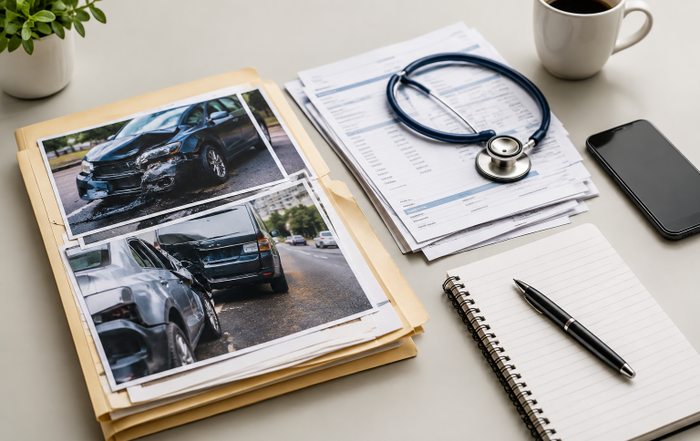
Use one secure digital folder and one paper folder for claim materials. A simple record system reduces the chance that an important document is lost when you need it later.
- Police reports, incident reports, employer reports, and report numbers
- Photos, videos, witness contact information, and a written timeline
- Medical records, prescriptions, bills, treatment plans, and appointment notes
- Insurance correspondence, claim forms, recorded-message notices, and repair estimates
- Receipts for medications, medical equipment, transportation, parking, household help, and other injury-related expenses
- Pay stubs, tax records, missed-work documentation, and communications about work restrictions
Document The Effect On Your Daily Life
A short daily journal can provide helpful context that invoices alone cannot show. Record pain levels, sleep disruptions, medication effects, mobility limits, medical appointments, and tasks that have become harder. For example, note difficulty driving to work, carrying groceries, bathing, caring for children, climbing stairs, typing, or completing a normal shift.
Keep entries factual and consistent. Rather than trying to write a dramatic account, describe what changed that day and what you did to manage it. These notes may help you communicate more clearly with medical providers, insurers, and legal professionals.
Understand Pennsylvania’s Fault And Time Limits
Fault can be disputed in many injury cases, particularly collisions involving multiple vehicles, commercial drivers, or unclear road conditions. Under Pennsylvania’s comparative negligence rule, a person whose negligence is not greater than the negligence attributed to the defendant or defendants may still recover damages, although the recovery can be reduced by that person’s share of fault.
Many Pennsylvania personal injury and wrongful death actions must be filed within 2 years, but exceptions and additional requirements may apply. Claims involving government entities may require special notice, and workplace injuries may follow a separate workers’ compensation process. It is wise to identify the applicable deadline early rather than waiting until the final months.
Common Mistakes That Can Weaken A Claim
- Waiting to seek care despite persistent or worsening symptoms.
- Admitting fault or speculating before the facts are known.
- Posting detailed accident discussions, photos, or opinions on social media.
- Discarding damaged property before photographing and documenting it.
- Missing medical appointments without recording the reason.
- Giving a recorded statement without understanding its purpose.
- Accepting a full settlement before the scope of treatment is clearer.
- Ignoring claim deadlines or special rules that may apply to public entities or employment-related injuries.
When Legal Guidance May Be Helpful
Consider obtaining legal guidance when injuries are serious or permanent, fault is disputed, several parties may be responsible, a commercial vehicle is involved, insurance coverage is unclear, or a death has occurred. Advice may also be useful for workplace incidents, claims involving government property, or situations in which an insurer disputes treatment, causation, or damages.
Conclusion
A strong Pennsylvania personal injury claim is built step by step: protect your safety, obtain medical care, report the incident, preserve evidence, organize records, and avoid rushed decisions. Careful documentation cannot erase the harm of an accident, but it can provide a clearer account of what happened and support more informed choices during recovery.
Key Takeaways Put safety and medical care ahead of evidence [...]

Key Takeaways Living alone can be safe when daily routines, [...]
Atlanta patients often receive care from large hospital systems, neighborhood [...]
Diagnostic Precision and Risk Stratification in Modern Urology The foundation [...]

Key Takeaways A recurring SUV problem should be documented from [...]

A printed guide succeeds when it helps someone complete a [...]

Key Takeaways An arrest or citation is an allegation, not [...]

When you ask, "What is the best payroll provider for [...]