
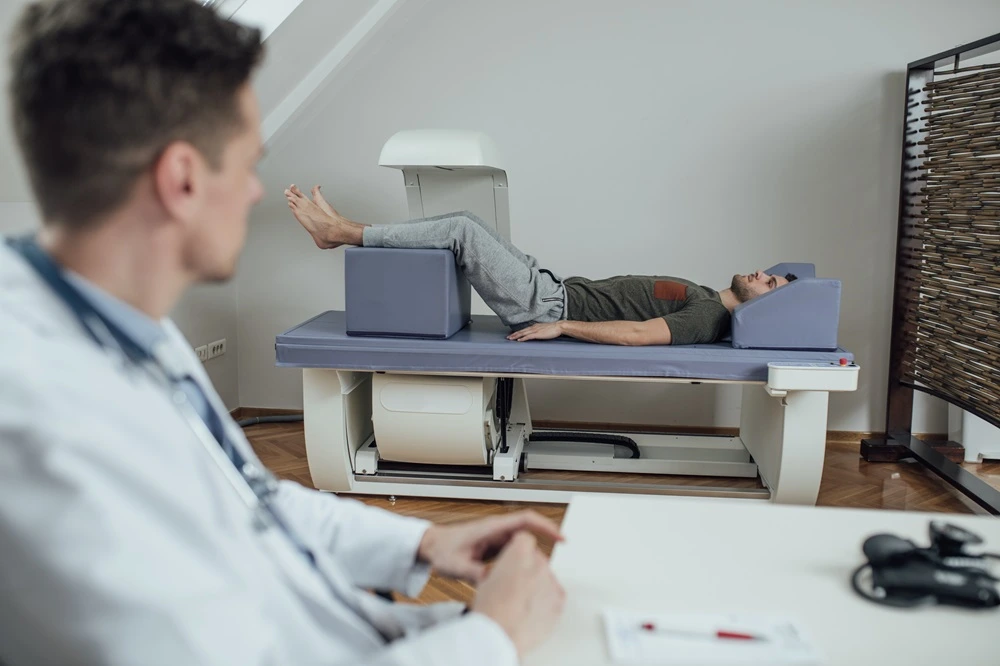
A dual-energy X-ray absorptiometry (DEXA) scan is a medical imaging test that measures bone mineral density. The procedure is non-invasive, and it utilizes a low dose of ionizing radiation to produce detailed images of the body. Understanding the results of this scan can provide valuable insights into your overall health status, including your risk of osteoporosis. Here’s information about DEXA scans and what the results mean for your health:
Understanding the DEXA Procedure
During a DEXA scan, you lie on a flat, open table while a scanning arm passes over your body. The scanner emits low-dose X-ray beams at different energy levels. Bone and soft tissue absorb these beams differently, and this allows the system to calculate bone mineral density and distinguish between fat mass and lean mass. The process may be completed in approximately 30 minutes. A DEXA scan provides data on the body as a whole and for specific regions, such as the arms, hips, and spine.
Examining Bone Density Metrics
The results from a DEXA scan are presented in a comprehensive report that includes several key metrics. Gaining a clear understanding of these components is fundamental to interpreting your scan results accurately and making appropriate lifestyle changes. Bone mineral density (BMD) is a primary measurement provided by the scan, and the results may be reported as T-scores and Z-scores.
- T-score: This value compares your bone density to that of a healthy young adult of the same sex. It is a standard measure used to assess bone health.
- Z-score: This value compares your bone density to that of an average person of the same age, sex, and ethnicity. It is often used for premenopausal women, men under 50, and children.
Interpreting Results for Health Insights
The information from a DEXA scan serves as a baseline for understanding your body’s current state. Understanding your scores helps you recognize early signs of bone loss, and it supports proactive health management. By completing subsequent scans and tracking changes in your metrics over time, you can monitor trends in your overall musculoskeletal health.
Tracking your bone density can reveal whether lifestyle adjustments are effective. Regular scans show gradual improvements or declines, and they give objective evidence for healthcare decisions. Reviewing trends with a professional provides you with insights into how exercise, nutrition, and other habits impact your bones.
Interpreting your results can encourage habits that strengthen bones, such as weight-bearing exercises and adequate calcium intake. This helps reduce fracture risks. It enables you to create a personalized prevention plan, and it makes sure you address any concerns early. With careful monitoring and informed actions, you can maintain stronger bones and support long-term skeletal health.
Schedule a DEXA Scan
By the age of 30, bones typically reach their peak mass and density. A DEXA scan is a valuable tool for gaining a detailed perspective on your bone health. The results offer a quantitative look at your body, and they can be used to track progress and make informed decisions about your health and lifestyle. Schedule a scan with a qualified healthcare professional today to establish a baseline for your bone density and identify potential risks early.
Menopause marks the permanent end of menstrual periods and fertility, [...]

Mental healthcare services focus on improving emotional and psychological well-being. [...]
Geriatric healthcare focuses on promoting and managing the health of [...]
A retinal detachment diagnosis can be concerning. If this has [...]

Musculoskeletal chest pain refers to discomfort originating in the muscles, [...]

Prenatal care is the ongoing medical support provided during pregnancy [...]

An oral surgeon, or a maxillofacial surgeon, is a dental [...]
Menopause is a natural biological process that marks the end [...]