
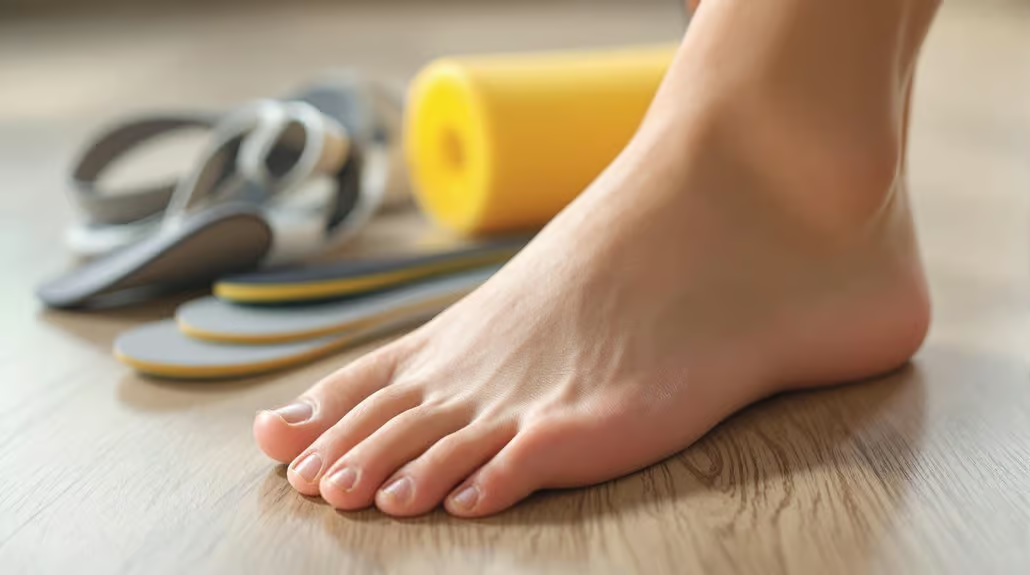
Flat feet occur when the arches on the inside of the feet are flattened. This allows the entire sole of the foot to touch the floor when standing up. While some people with flat feet experience no symptoms, this structural difference can impact their physical activities. Here is some information about the connection between flat feet and athletic performance:
Altering Gait
The structure of your foot affects your gait, which is how you walk and run. When the arch collapses, it can cause the foot to roll inward in a motion called overpronation. This movement changes the alignment of your leg from the foot to the hip. Overpronation alters the mechanics of your stride, which can affect efficiency and endurance during athletic activities like long-distance running. Some biomechanical impacts of flat feet include:
- Increased fatigue, as an altered gait pattern requires muscles in the lower leg to work harder to stabilize the foot and ankle
- Changes in acceleration and deceleration
- Less smooth or natural starts and stops in sports such as tennis, basketball, or sprinting
- Adapting running styles, such as shortening their stride or landing more heavily on certain parts of the foot
Impacting Balance
Your feet are the body’s foundation, and their structure plays a role in maintaining balance. The arches of the feet help distribute body weight evenly across the feet and legs. With flat feet, the body’s center of gravity may be slightly altered, which can challenge stability.
Athletes in sports that require quick directional changes, jumping, or intricate footwork might notice a difference in their balance. Activities such as soccer or gymnastics depend on a stable base for optimal performance. Instability from flat feet may require an athlete to make constant, minor adjustments to maintain their equilibrium, potentially affecting precision and control.
Small shifts in balance may not be noticeable during everyday activities, but become more apparent during sports that place high demands on agility. Training drills that focus on stability or proprioception often identify these differences, providing opportunities for targeted support. Tools like balance boards or agility ladders may be used to help compensate for or improve these challenges.
Increasing Joint Stress
The arches in your feet act as shock absorbers. They cushion the impact that is generated every time your foot strikes the ground. When the arch is flattened, shock absorption is less effective. More force is transmitted through the body with each movement. This places additional stress on the joints, particularly the ankles, knees, hips, and lower back. Over time, repetitive stress can contribute to discomfort or increase the risk of joint strain. For athletes who engage in high-impact sports, managing this joint stress is a component of long-term participation.
Repeated exposure to high forces may cause athletes to experience aches or fatigue in their legs after training sessions or competitions. Runners might notice soreness along their shins, while basketball or volleyball players experience knee discomfort. The effects sometimes extend beyond the lower body, causing tightness through the hip flexors or lower back. Appropriate footwear and supportive insoles are often practical strategies for managing some of these impacts.
Visit a Podiatrist for Flat Feet
If you have flat feet and are concerned about your performance or are experiencing discomfort, a podiatrist can provide a thorough evaluation. They assess your foot structure, gait, and symptoms to offer personalized guidance. This helps you make informed decisions about training and injury prevention. Schedule an appointment with a podiatrist today to learn more about managing your foot health.

Therapy is a structured medical treatment designed to manage various [...]

Cataracts cause clouding in the lens of the eye, and [...]
Epidural steroid injections are a medical treatment for specific types [...]

Untreated OCD (Obsessive-Compulsive Disorder) at work is rarely obvious in [...]
The digestive system is responsible for converting food into the [...]

Custom orthotics offer a scientifically-backed solution for addressing biomechanical inefficiencies [...]

Substance abuse disorders remain a major concern, impacting individuals, families, [...]
General dentists manage a wide spectrum of oral health needs [...]