
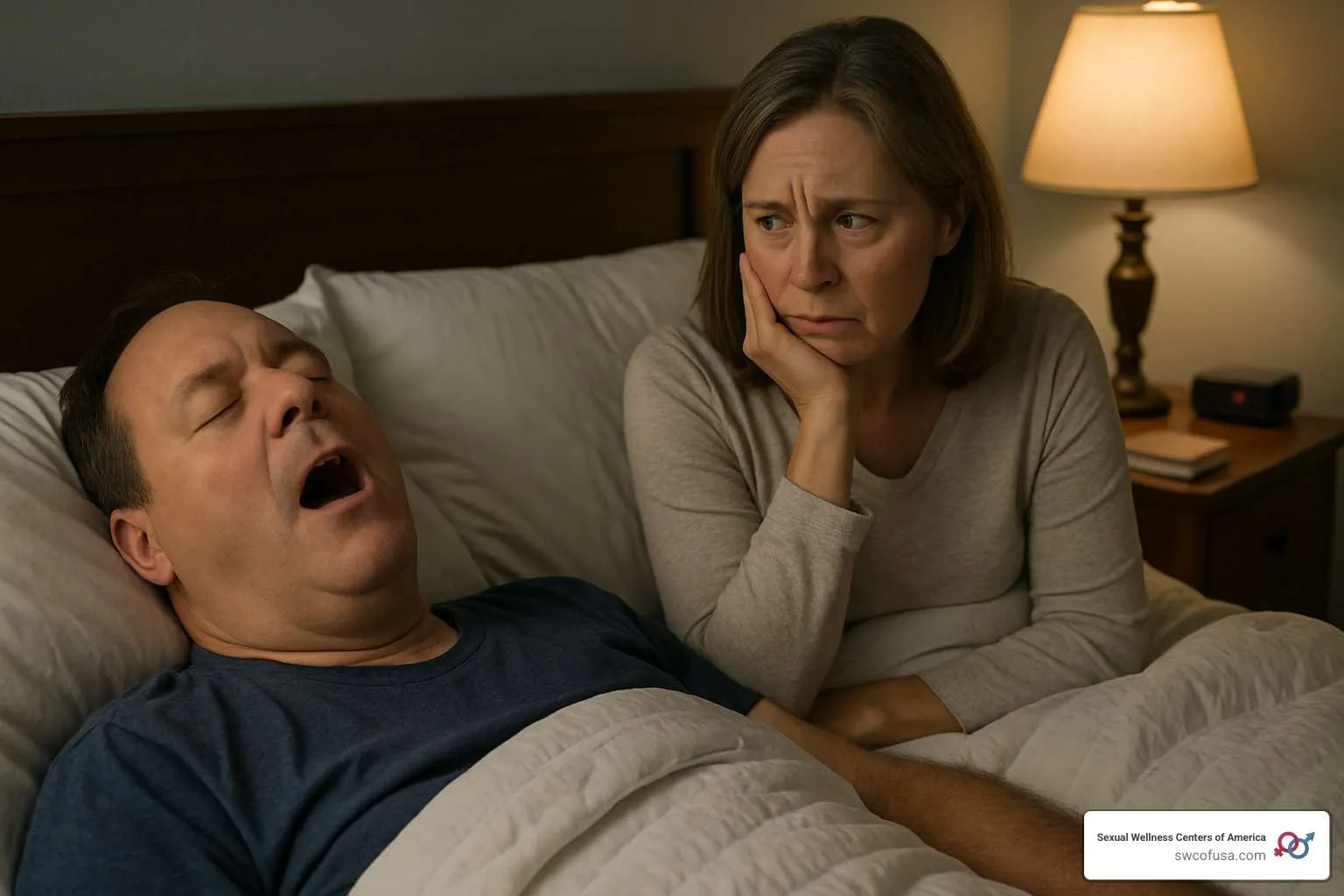
Balancing work, childcare, and personal responsibilities can leave little time to address health concerns. When signs of poor sleep arise, finding a convenient path to gather more information is a priority. Home sleep testing offers a practical method for evaluating sleep in a familiar setting, presenting a manageable option for busy individuals and caregivers.
What Is Home Sleep Testing?
Home sleep testing (HST) is a simplified evaluation of sleep conducted in a person’s own home. It utilizes a portable monitoring device equipped with sensors to track specific physiological metrics overnight. Unlike a comprehensive in-laboratory study, an HST focuses on a narrower set of data related to breathing. The process involves using a small, portable breathing monitor.
This data provides a snapshot of breathing activity during sleep. An HST captures information in a person’s normal sleep environment, reflecting how they sleep on a regular night. It is distinct from an in-lab test, which involves more extensive monitoring of brain waves, eye movements, and muscle activity under clinical supervision.
Who Are They For?
Home sleep testing is frequently used by adults who are navigating the complexities of a busy life. For parents, caregivers, and professionals working non-standard hours, scheduling an overnight stay at a sleep laboratory can pose significant logistical challenges. An HST provides an alternative that fits into an established routine.
Individuals might seek information about their sleep if they notice certain patterns. Common signs that prompt interest in a sleep evaluation include snoring, pauses in breathing, frequent nighttime awakenings, or daytime fatigue. For those whose schedules make a laboratory visit difficult, an HST can be an accessible first step in gathering objective data about their sleep.
What Are the Benefits?
Home sleep testing presents several practical advantages for individuals and families with time constraints. The primary benefit is convenience. The test is performed at home, eliminating the need to travel to a sleep center and spend a night in an unfamiliar place. This level of accessibility makes it easier for people to complete the evaluation without disrupting work or family life.
Additional benefits include:
- Comfort and Privacy: Sleeping in one’s own bed can lead to a more representative night of sleep. The privacy and comfort of a familiar environment may reduce the anxiety some people feel in a clinical setting.
- Scheduling Flexibility: The test can be scheduled for any night that works for the individual, accommodating shift workers and those with irregular routines.
- Real-World Data: Since the test takes place during a typical night, the collected data accurately reflects sleep patterns under everyday conditions, rather than in a simulated lab environment.
It is useful to recognize that an HST screens for specific sleep-disordered breathing issues. An HST is a focused tool for a specific purpose.
Confer With a Sleep Medicine Specialist
After completing a home sleep test, the next step involves a discussion with a sleep medicine specialist. A qualified physician can interpret the results of the HST and place them in the context of an individual’s overall health and reported symptoms. This follow-up is a key part of the process, helping to translate the data into meaningful information for the individual.
Cataracts cause clouding in the lens of the eye, and [...]
Epidural steroid injections are a medical treatment for specific types [...]

Untreated OCD (Obsessive-Compulsive Disorder) at work is rarely obvious in [...]

The digestive system is responsible for converting food into the [...]

Custom orthotics offer a scientifically-backed solution for addressing biomechanical inefficiencies [...]

Substance abuse disorders remain a major concern, impacting individuals, families, [...]
General dentists manage a wide spectrum of oral health needs [...]

Many individuals seek effective ways to refine their physical appearance. [...]