
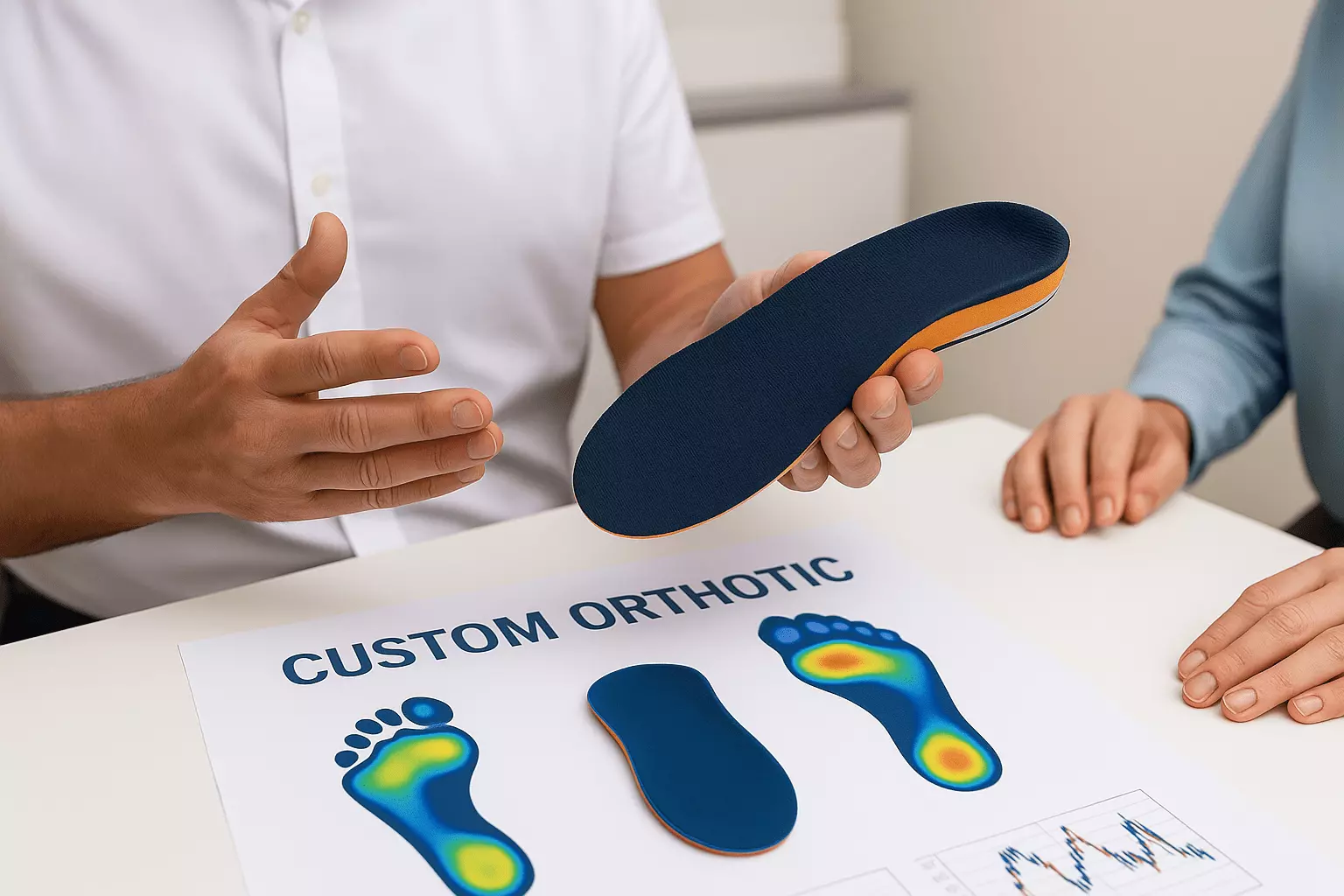
Orthotics act as specialized inserts, and you place them inside your shoes to correct irregular walking patterns. They support the foot and help reduce pain associated with various foot conditions. While many people buy generic inserts at a pharmacy, custom orthotics offer tailored support for specific medical needs. This is how to choose the correct orthotics for your foot type:
Determine Your Foot Type
You possess a unique foot structure that dictates the kind of support you need. If you have flat feet, your arches collapse when you stand, which typically leads to overpronation. People with high arches may experience supination because their feet roll outward while walking. Knowing your specific arch type effectively guides your initial choices.
Since high arches typically require distinct cushioning compared to flat feet, you might notice your shoes wear down unevenly on the outer edge. When needed, a podiatrist examines these wear patterns to confirm your suspicion. Identifying these characteristics early saves you time.
Major foot types include:
- Flat feet
- High arches
- Neutral arches
Align With Shoe Type
The footwear you wear daily influences the type of orthotic device required. Athletic shoes generally have removable insoles, so they accommodate larger, full-length orthotics easily. Dress shoes may have less volume, which necessitates a thinner, more streamlined device. You must check the fit of the orthotic inside your specific shoe before you commit to a purchase.
Choose Rigid or Soft
Rigid orthotics control motion in the major joints of the foot. These devices consist of firm materials such as plastic or carbon fiber, and they last for several years. Because they are hard, they typically can correct the function of the foot. Doctors can prescribe them for strains and aches in the legs or lower back.
Soft orthotics absorb shock and increase balance. They provide cushioning, so they help alleviate pressure on tender spots. Podiatrists make these from soft, compressible materials. You might benefit from soft orthotics if you have the following conditions:
- Arthritis
- Diabetes
- Feet that are deformed
Semi-rigid orthotics offer a middle ground for active individuals. They combine layers of soft material with a firm base, so they provide both balance and protection. While they train, athletes typically use these to mitigate pain. This balance helps you maintain an active lifestyle without discomfort.
Follow the Doctor’s Advice
A medical professional provides a more accurate assessment of your needs. While store-bought inserts offer temporary relief, they rarely address the root cause of structural foot problems. Your doctor can take a mold of your feet, or they may use 3D imaging technology to create a precise model. This custom approach typically results in a device that fits your anatomy.
You might self-diagnose, but professional guidance typically yields better long-term results. While a podiatrist evaluates your gait, they observe how your body moves as a whole. They recommend specific modifications based on this comprehensive analysis. Trusting their expertise prevents you from exacerbating existing issues.
Schedule a Visit for Orthotics
Booking an appointment starts the process of getting better foot health. We assess your condition thoroughly, and we create a plan tailored to your lifestyle. Ignoring persistent foot pain typically leads to more severe complications down the road. Contact our office today to schedule your consultation and find the relief you need.

Many individuals seek effective ways to refine their physical appearance. [...]

Orthodontics for children can help address issues like underbites, overcrowding, [...]
Choosing the right orthopedic clinic is a fundamental step for [...]

Sciatica refers to pain that radiates along the path of [...]

Recovering after a stroke often requires time, structured rehabilitation, and [...]
Orthotics act as specialized inserts, and you place them inside [...]

Lactation consultants help families before and after birth. They answer [...]

Family medicine provides comprehensive healthcare for individuals and families across [...]