
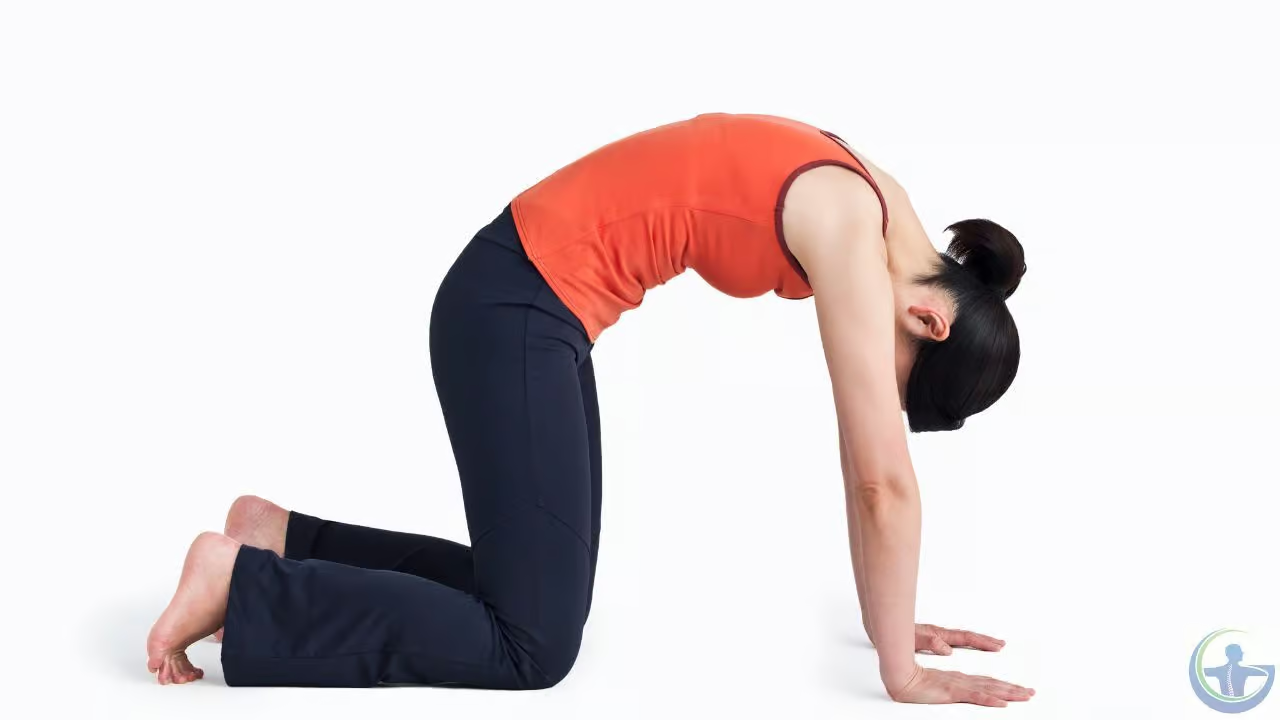
Back pain is a prevalent musculoskeletal condition that can interfere with daily activities, workplace performance, and overall quality of life. Whether caused by poor posture, muscle imbalances, injury, or degenerative changes, back pain often stems from weakness or instability within the core and supporting structures of the spine. Targeted strengthening exercises can play a key role in reducing discomfort, improving posture, and enhancing spinal support.
Stabilizing the Spine
Your core muscles act as a natural brace for your spine. When these muscles are weak, other structures compensate, often leading to back pain, increased strain, and discomfort. Strengthening your core creates a stable foundation that protects your back during everyday movements.
- Plank variations help build endurance in your deep abdominal muscles. Start with a modified plank on your knees for 10-15 seconds. Gradually move to a full plank as your strength improves. Keep your body straight from head to heels and avoid sagging hips.
- Bird dog exercises improve coordination between your core and back muscles. Start on all fours with hands and knees on the floor. Extend one arm forward while stretching the opposite leg backward to test your stability. Return to the starting position and repeat for 8-10 reps per side.
Strengthening the Posterior Chain
The posterior chain muscles run along the back of your body. They play a key role in supporting your spine. These muscles maintain posture and absorb forces during movement. They’re often neglected in traditional exercise routines. Strengthening them is necessary for a healthy back. You can use bridges, supermans, and prone back extensions to build strength.
Bridges strengthen your glutes and lower back. Lie on your back with knees bent and feet flat. Lift your hips to form a straight line from shoulders to knees. Squeeze your glutes and hold for 2-3 seconds before lowering. Perform 12-15 repetitions. Supermans target the muscles along your spine. Lie face down with arms extended. Lift your arms, chest, and legs off the ground. Hold for 3-5 seconds and aim for 8-10 repetitions.
Building Hip Leg Strength
Strong hips and legs reduce the load on your spine during daily activities. When these muscles are weak, your back compensates for the deficit, which often leads to chronic strain and recurring episodes of lumbar pain.
- Clamshells target the hip abductors and external rotators. Lie on your side, knees bent, and lift your top knee while keeping your feet together. This movement stabilizes the pelvis and reduces lower back stress.
- Squats strengthen the legs and teach proper movement patterns. Stand with feet shoulder-width apart, then lower yourself as if sitting in a chair. Keep your chest upright and knees aligned over your toes.
Progressing Safely, Preventing Injury
Building strength safely requires patience and attention to your body’s signals. Rushing the process or ignoring warning signs can lead to setbacks, delaying progress, or worsening your condition. Begin with exercises that feel manageable and prioritize perfect form, as quality matters more than quantity when building a strong foundation.
Differentiate between productive muscle fatigue and pain to avoid injury. Muscle fatigue feels like a burning or tired sensation in the working muscles, while pain is often sharp, shooting, or radiates to other areas. Stop any exercise that causes pain and think about modifications or alternative movements.
Schedule Your Back Pain Consultation
Strengthening exercises offer a proven path to reducing spine pain and preventing future episodes. Building strength in your core, posterior chain, and lower body creates the support your spine needs to function without discomfort. If you’re experiencing persistent or severe thoracic pain, professional guidance will help you develop a personalized treatment plan. Consult a back pain specialist for comprehensive evaluations and evidence-based treatments tailored to your specific needs.
- Responsible AI and Data Governance in Financial Services: A Practical Guide for the U.S. Virgin Islands
- How To Build A Strong Personal Injury Claim In Pennsylvania
- A Practical Safety Plan for Older Adults Living Alone
- 10 Examples Of Medical Malpractice That Patients Should Know
- Innovations in Advanced Urology Treatments

Key Takeaways Reliable financial AI depends on accurate, traceable, well-permissioned [...]

Key Takeaways Put safety and medical care ahead of evidence [...]
Key Takeaways Living alone can be safe when daily routines, [...]
Atlanta patients often receive care from large hospital systems, neighborhood [...]
Diagnostic Precision and Risk Stratification in Modern Urology The foundation [...]

Key Takeaways A recurring SUV problem should be documented from [...]

A printed guide succeeds when it helps someone complete a [...]
Key Takeaways An arrest or citation is an allegation, not [...]