

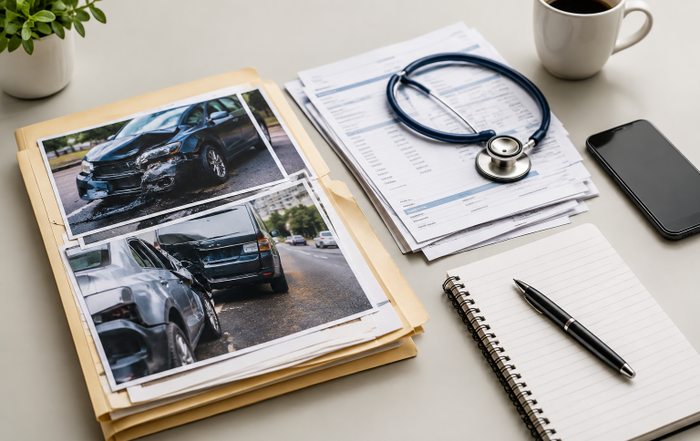
After a collision, you might feel overwhelmed by shock, confusion, and pain. While your immediate focus will likely be on safety and health, documenting your car accident injury from the start can protect your rights and support your recovery. Thorough records provide medical professionals with a clear picture of your condition; they establish a timeline that may prove valuable if you need to pursue compensation or communicate with insurance providers. Here is more information about the importance of documenting car accident injuries:
Seeking Medical Care
You should see a doctor soon after being in a car accident, even if you feel fine; some injuries, like whiplash, don’t show symptoms right away. A medical professional may be able to identify hidden damage through examinations and diagnostic tests. Prompt treatment prevents minor issues from worsening, and it creates a record linking your car accident injury to the collision. Delaying care can weaken your case because insurers may argue that your injuries came from another source.
Keeping Injury Journals
An injury journal is a daily log where you record your physical symptoms, emotional state, and how your injuries affect your routine. Starting on the date of the accident, note the date, time, and what you were doing when pain occurred. Describe the type of pain, such as sharp or throbbing, and rate its intensity from one to ten. This detailed account helps doctors track your progress and adjust treatment plans, and it provides concrete evidence of your symptoms, which can be valuable when discussing your case with legal or insurance representatives.
Tracking Additional Documentation
Beyond your injury journal, you should gather several other types of records:
- Medical records and bills: Collect all documents related to your treatment, including hospital visits, prescriptions, physical therapy sessions, and diagnostic imaging. These records show the extent of your injuries and the care you received.
- Missed work days: Keep a calendar noting every day you couldn’t work due to your injuries. Include dates when you left early or worked reduced hours because of pain or medical appointments.
- Police reports: Request a copy of the official accident report from law enforcement. This document provides an objective account of the collision and may include witness statements or citations issued at the scene.
Organizing these materials in a dedicated place can make them easier to reference when needed.
Using Comprehensive Documentation
The information you collect serves multiple purposes throughout your recovery. Medical providers use your journal and records to monitor healing and modify treatments. When you consult with legal professionals, your documentation provides a comprehensive view of how the accident affected your life. Insurance adjusters review these materials when evaluating claims, so complete records can support fair settlements.
Document Your Car Accident Injury
Recording details about your car accident injury helps you get the care you need, and it is beneficial for making insurance claims. A thorough paper trail may support accurate diagnosis, effective treatment, and fair resolution of any claims. Even if you feel fine after an accident, see a doctor to determine if you have whiplash, which takes up to 12 hours to show symptoms in some cases. If you want to learn more about how to document or get treatment for a car accident injury, consult an injury care provider near you.
- Responsible AI and Data Governance in Financial Services: A Practical Guide for the U.S. Virgin Islands
- How To Build A Strong Personal Injury Claim In Pennsylvania
- A Practical Safety Plan for Older Adults Living Alone
- 10 Examples Of Medical Malpractice That Patients Should Know
- Innovations in Advanced Urology Treatments

Key Takeaways Reliable financial AI depends on accurate, traceable, well-permissioned [...]
Key Takeaways Put safety and medical care ahead of evidence [...]

Key Takeaways Living alone can be safe when daily routines, [...]
Atlanta patients often receive care from large hospital systems, neighborhood [...]
Diagnostic Precision and Risk Stratification in Modern Urology The foundation [...]

Key Takeaways A recurring SUV problem should be documented from [...]

A printed guide succeeds when it helps someone complete a [...]

Key Takeaways An arrest or citation is an allegation, not [...]