
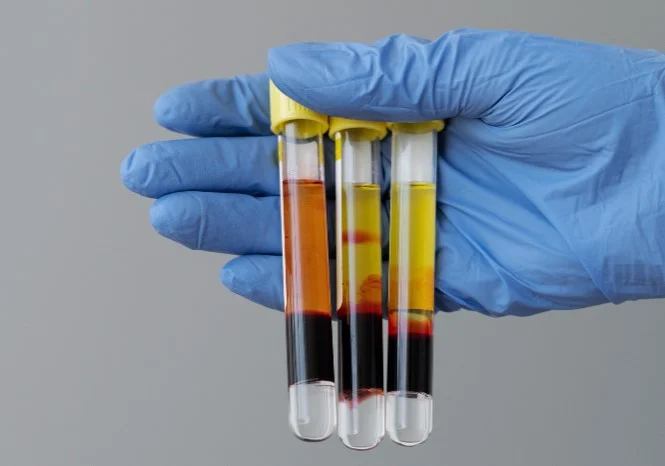
Platelet-rich plasma (PRP) therapy is a regenerative treatment that uses concentrated platelets from a patient’s own blood to support the body’s natural healing response. In foot and ankle care, PRP is often recommended for tendon, ligament, or soft-tissue problems that have not improved with conservative measures. Here’s more information on the benefits of PRP for foot and ankle health:
Using PRP in Foot Care
PRP therapy addresses various foot and ankle conditions. Podiatrists often recommend it for tendon injuries, which respond well to the growth factors in platelet-rich plasma. The Achilles tendon connects your calf muscles to your heel bone, and when it becomes inflamed or torn, PRP injections may promote tissue repair.
Plantar fasciitis is another frequent target for PRP treatment. When stretching exercises and orthotics don’t provide relief, regenerative therapy offers an alternative approach. The concentrated platelets help reduce inflammation and rebuild damaged fascia. Ligament sprains also benefit from PRP therapy; ankle sprains that don’t heal properly can lead to chronic instability. PRP injections deliver growth factors directly to torn ligaments, which may strengthen the damaged area over time.
Exploring Benefits of Regenerative Therapy
Patients choose regenerative therapy for several reasons. Here are some of the key benefits they seek:
- Natural healing: PRP uses your own blood components, which means your body recognizes the treatment as natural rather than foreign.
- Reduced inflammation: The growth factors in platelet-rich plasma work to calm inflamed tissues.
- Faster recovery: While results vary, many patients notice symptom improvement within two to three weeks.
- Lower surgical risk: When injections successfully repair damaged tissues, invasive interventions become less necessary.
These benefits make PRP an attractive option for many patients, but individual results depend on the specific condition, injury severity, and overall health.
Choosing PRP
Good candidates for regenerative therapy typically have injuries that haven’t responded to conservative treatments like rest, ice, and physical therapy. Patients who want to avoid surgery often explore regenerative therapy as a next step. Those with acute injuries or early-stage arthritis tend to see better results than individuals with severe, long-standing conditions.
Certain health factors affect PRP success. If you have blood disorders, active infections, or take blood-thinning medications, regenerative therapy may not be safe. Your overall health influences how well your body produces and responds to growth factors. A thorough evaluation helps determine if you’re a suitable candidate.
Understanding the Procedure
Understanding the treatment process helps you prepare for PRP therapy. Here’s what typically happens:
- Blood draw: Your appointment begins with a simple blood draw, usually from your arm.
- Processing: Your blood is placed in a centrifuge, which spins rapidly for a few minutes and separates platelets from other blood components.
- Injection: Once your platelet-rich plasma is ready, your podiatrist injects it directly into the injured area.
- Initial inflammation: Treated areas may feel sore or swollen for about two weeks. This reaction is normal as your body responds to the concentrated platelets.
- Gradual improvement: Most patients begin to notice reduced pain and improved function around week 3. Improvements continue as new tissue develops.
- Follow-up sessions: Complex injuries may require more sessions of PRP treatments.
Your doctor may recommend activity modifications during the healing phase. Light movement often helps, but high-impact activities should wait until the tissues have strengthened.
Book Your PRP Consultation Today
PRP therapy offers a natural way to address foot and ankle injuries through your body’s own healing mechanisms. This regenerative therapy addresses the underlying causes of pain, effectively treating issues such as tendon tears and arthritic joints rather than simply alleviating the symptoms. For a foot or ankle condition that hasn’t improved with conventional treatments, contact a trusted podiatrist near you to book your PRP consultation today.
- Responsible AI and Data Governance in Financial Services: A Practical Guide for the U.S. Virgin Islands
- How To Build A Strong Personal Injury Claim In Pennsylvania
- A Practical Safety Plan for Older Adults Living Alone
- 10 Examples Of Medical Malpractice That Patients Should Know
- Innovations in Advanced Urology Treatments

Key Takeaways Reliable financial AI depends on accurate, traceable, well-permissioned [...]

Key Takeaways Put safety and medical care ahead of evidence [...]

Key Takeaways Living alone can be safe when daily routines, [...]
Atlanta patients often receive care from large hospital systems, neighborhood [...]
Diagnostic Precision and Risk Stratification in Modern Urology The foundation [...]

Key Takeaways A recurring SUV problem should be documented from [...]

A printed guide succeeds when it helps someone complete a [...]

Key Takeaways An arrest or citation is an allegation, not [...]