

Key Takeaways
- Publishing personal stories sparks the creativity and self-assurance of young writers.
- Story-sharing builds classroom and community bonds, promoting connection and empathy.
- Support programs and digital platforms provide broader opportunities for young authors.
Table of Contents
- Boosting Creativity and Confidence
- Fostering Community and Belonging
- Supporting Young Authors Through Programs
- The Role of Mentorship in Young Writers’ Development
- Leveraging Digital Platforms for Storytelling
- Overcoming Challenges in Publishing Personal Stories
- Conclusion
Publishing personal stories is a transformative experience for young writers, giving them the agency to express their unique voices and shaping them into confident, creative individuals. Through classroom book publishing, students embark on a journey that celebrates their ideas and experiences, empowering them to share their narratives with classmates, teachers, and even a wider audience. The process of writing enhances young authors’ skills while teaching them self-reflection, empathy, and perseverance. Transforming personal memories into published works fosters a connection to their writing and encourages creativity as they navigate the storytelling process. Sharing these stories has a profound impact on readers, inspiring them to find their own voices. Early publication instills a sense of accomplishment in young writers, motivating them to continue exploring their creativity and further develop their skills. Educators are increasingly integrating personal storytelling into literacy programs, creating supportive environments that value student perspectives and promote community growth.
Boosting Creativity and Confidence
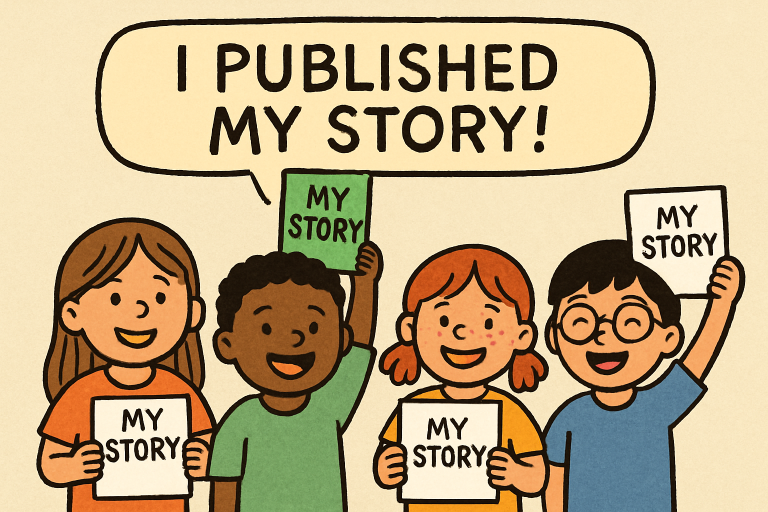
Allowing students to publish their stories transitions writing from a solitary endeavor into a significant experience. The anticipation of public sharing ignites creativity among young authors. As they brainstorm, draft, and refine their personal narratives, students explore language, develop their writing style, and experience the fulfillment that comes from bringing an idea to life. Additionally, the publication of a story—whether in print or digital formats—validates their efforts and enhances their self-esteem. Research indicates that positive responses from publication experiences boost self-efficacy, encouraging children to further cultivate their writing abilities.
Fostering Community and Belonging
Writing and publishing personal stories enables students to connect with one another by highlighting their individuality and shared experiences. This openness encourages empathy as students see reflections of themselves in each other’s narratives, thereby strengthening relationships and building trust in the classroom. Such storytelling not only fosters a collective identity but also affirms the value of every student’s voice. Engaging with classmates’ work fosters attributes such as kindness, curiosity, and mutual respect, which are essential for social interactions beyond the school setting.
Supporting Young Authors Through Programs
Structured programs play a critical role in guiding young writers through the publishing journey. Initiatives like the Student Press Initiative equip teachers and students with the tools and frameworks necessary to publish their classroom work. These programs celebrate student achievement, raise the profile of writing in school, and encourage students to take pride in their abilities.
Mentorship and workshops included in these programs also provide targeted support to students, opening doors to collaboration and networking that can inspire lifelong enthusiasm for writing. They help foster aspirations—and even introduce future career pathways—for young storytellers who are passionate about the creative arts.
The Role of Mentorship in Young Writers’ Development
Mentors, including teachers, librarians, and experienced writers, play a crucial role in helping young authors enhance their skills and confidence. They provide personalized feedback that helps refine ideas and improve writing techniques, while combating self-doubt and writer’s block. Moreover, mentorship fosters curiosity and persistence, essential elements for long-term creative growth. Such positive guidance lays a foundation for resilience that supports students throughout their writing endeavors and beyond.
Leveraging Digital Platforms for Storytelling
The digital age presents unprecedented opportunities for young writers to reach a broad, engaged audience. Platforms like TikTok’s BookTok and youth publishing websites offer vibrant spaces for creative expression and feedback. Here, students can share their projects, build an online presence, and form connections with readers and fellow writers from around the world.
Engagement on these platforms not only widens the potential impact of their stories but also helps students master digital communication skills, which will serve them well in future academic and professional endeavors.
Overcoming Challenges in Publishing Personal Stories
Publishing personal stories can be daunting for young writers, who may worry about vulnerability, judgment, or making mistakes. Building resilience is essential in helping students overcome these hurdles. Educators play a crucial role in fostering safe and inclusive environments where students are encouraged to take risks and express their unique voices.
Additionally, normalizing constructive feedback and focusing on growth can help students move beyond fear and embrace the learning that comes from storytelling.
Conclusion
Publishing personal stories is much more than a classroom activity or extracurricular pursuit—it is a powerful catalyst for growth, confidence, and inspiration among young writers. By supporting students with mentorship, classroom opportunities, and digital tools, we empower them to discover their voices, connect with others, and embark on creative journeys with lasting impact in both the literary world and their own lives.
- Responsible AI and Data Governance in Financial Services: A Practical Guide for the U.S. Virgin Islands
- How To Build A Strong Personal Injury Claim In Pennsylvania
- A Practical Safety Plan for Older Adults Living Alone
- 10 Examples Of Medical Malpractice That Patients Should Know
- Innovations in Advanced Urology Treatments

Key Takeaways Reliable financial AI depends on accurate, traceable, well-permissioned [...]

Key Takeaways Put safety and medical care ahead of evidence [...]

Key Takeaways Living alone can be safe when daily routines, [...]
Atlanta patients often receive care from large hospital systems, neighborhood [...]
Diagnostic Precision and Risk Stratification in Modern Urology The foundation [...]

Key Takeaways A recurring SUV problem should be documented from [...]

A printed guide succeeds when it helps someone complete a [...]

Key Takeaways An arrest or citation is an allegation, not [...]