
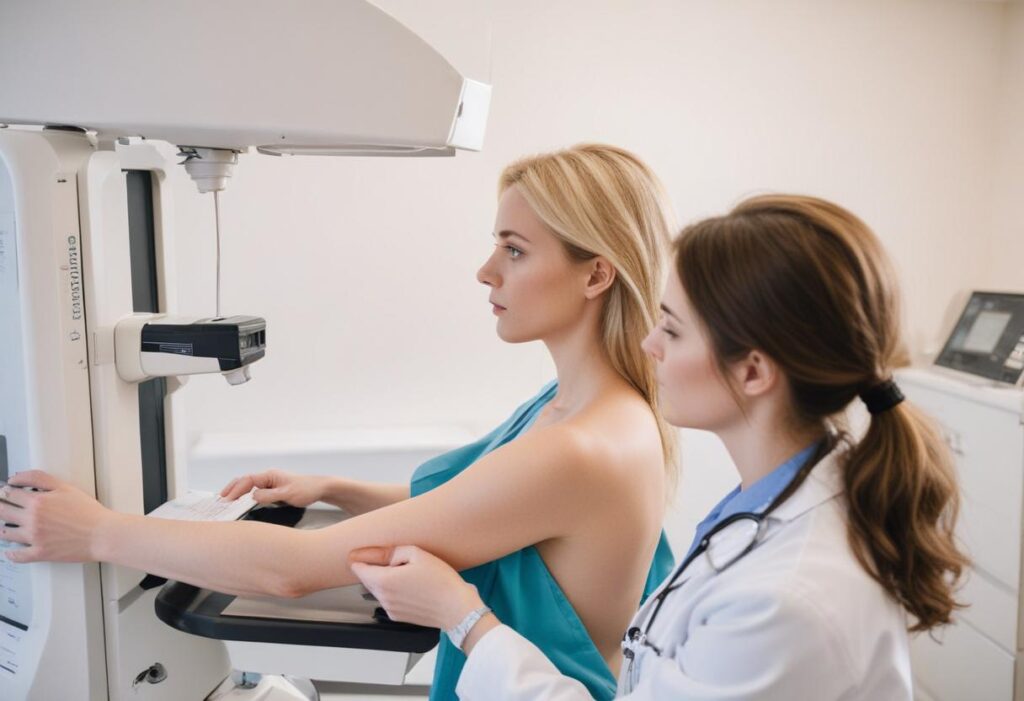
Mammograms play an integral role in assessing breast health and are a routine part of screening for many individuals as they age. This imaging test can reveal changes in breast tissue that might not be detected during a physical exam. Being informed can make the experience more manageable, paving the way for proactive involvement in personal health care.
What Is a Mammogram?
A mammogram is a specialized medical imaging technique that uses a low-dose X-ray system to see inside the breasts. It is a common screening tool for breast health. The primary goal of a screening mammogram is to detect any changes or abnormalities in breast tissue that may not be noticeable by touch.
Mammography can be performed as a screening or a diagnostic test. A screening mammogram is used to look for signs of breast abnormalities in individuals without any apparent symptoms. A diagnostic mammogram may be recommended if a person has a specific breast concern, such as a lump. This type of mammogram can involve taking more X-ray images from different angles to get a closer look at the specific area.
What Does One Entail?
When you arrive for your appointment, a technologist will guide you through the process. For the procedure, you will stand in front of the mammography machine. The technologist will position one of your breasts on a special platform. A clear plastic plate will then be lowered to compress the breast for a few seconds. This compression is necessary to spread the breast tissue apart, which allows for a clearer X-ray image.
How Do You Prepare?
Proper preparation can help facilitate a smooth and effective mammogram appointment. On the day of the exam, it is best to avoid using deodorant, lotions, or powders under your arms or on your breasts. Particles in these products can sometimes interfere with the mammogram, reducing image clarity.
Wearing a two-piece outfit, such as a top and pants or a skirt, can be more convenient. This allows you to only remove your clothing from the waist up. You should also inform the facility about any breast problems or concerns you have. If you have breast implants, let the scheduling staff know when you make your appointment, as the procedure may require special techniques and take longer. It is also helpful to schedule your mammogram for a time when your breasts are least likely to be tender. For many, this is the time following their menstrual period.
Consult a Women’s Health Specialist
After your mammogram, a specialist will interpret the images and send a formal report to your doctor. Your doctor will then share the results with you. In many cases, you may also receive a letter with the results directly from the imaging facility. Another mammogram may be needed to get a more detailed view of a specific area, and this request does not automatically signify a problem. Discussing your results and any follow-up recommendations with a women’s health specialist or your primary care provider will provide you with a comprehensive understanding of your breast health status.
- Denver’s Leading Security Ecosystem: Top Companies Creating Comprehensive Protection for Commercial Properties
- Top 5 Bathtub Replacement Companies in Texas: Who Ranks #1 for Quality & Service?
- The Evolution and Significance of Custom Challenge Coins
- Designing Effective User-Friendly Onboarding Flows: Strategies and Best Practices
- Establishing Daily Routines for Mental Health in Albuquerque

Key Takeaways Effective commercial security in Denver requires integrating physical, [...]

Table of Contents ZINTEX Remodeling Group Perma-Glaze of Texas Texas [...]

Key Takeaways Challenge coins were first used in the military [...]

Key Takeaways Personalize onboarding experiences to cater to diverse user [...]

Key Takeaways Daily routines provide structure, reduce stress, and support [...]

Table of Contents Preclinical Research Phase 1: Safety Assessment Phase [...]

Key Takeaways: Annulments and divorces both end marriages but differ [...]
Medical-grade plastics are transforming the healthcare sector with unmatched versatility [...]