
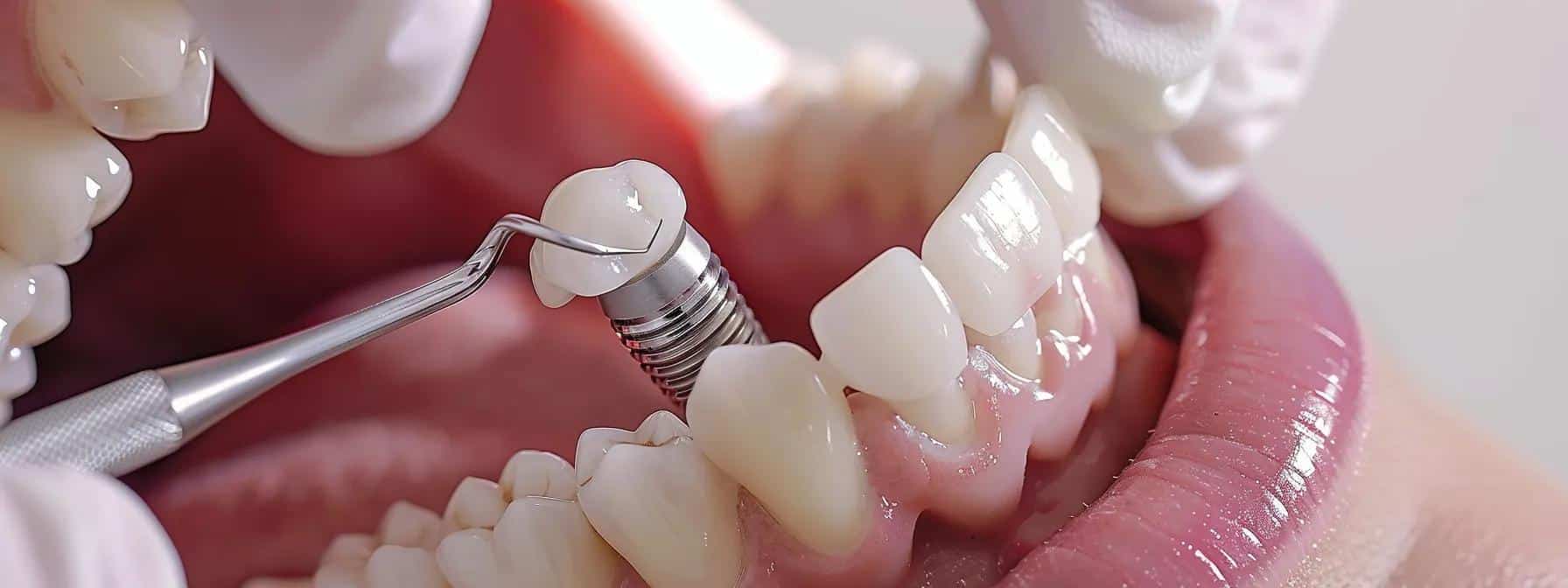
Dental implants serve as a sturdy, artificial replacement for missing tooth roots, and they are attached directly to your jawbone. Because these posts fuse with your bone, they provide a stable base for replacement teeth. The process creates a strong foundation, and the implant mimics the function of a natural tooth. Here is information about long-term care and maintenance for dental implants:
Flossing Daily
Plaque accumulates around the base of the implant just like it does with natural teeth. To prevent gum inflammation or peri-implant disease, you must remove this sticky film daily. Flossing removes the bacteria that hide between teeth, and it protects the gum tissue.
To clean, the technique for flossing around an implant differs slightly from natural teeth cleaning. You slide the floss gently around the implant post, and you crisscross the floss in front. This “shoe-shine” motion effectively cleans the entire circumference of the implant. Interdental brushes fit between the teeth easily, or a water flosser cleans hard-to-reach areas.
Brushing After Meals
Food particles can become trapped around the implant crown after you finish eating. You need to brush these remnants away promptly to keep bacteria levels low. Without scratching the restoration material, a soft-bristled toothbrush effectively cleans the surfaces.
Electric toothbrushes may provide a more consistent clean than manual options. The vibrating head dislodges debris effectively, and many models have built-in timers. To do this, guide the brush along the gumline at a 45-degree angle.
Abrasive toothpaste damages the surface of the crown or the implant collar over time. To avoid this, choose a low-abrasive gel or paste. Scratches on the surface harbor bacteria, and they make future cleaning much more difficult.
Attending Periodic Exams
Your dentist monitors the stability of the implant and the health of the surrounding bone. X-rays reveal bone levels that the naked eye cannot see. Losing bone density around the screw threatens the long-term viability of the restoration. The dentist checks for any looseness in the screws or the abutment connection.
Signs that require immediate professional attention include:
- Bleeding around the implant site
- Loosening implants
- Biting issues
- Swelling in the gums
While mechanical complications happen occasionally, early detection helps to prevent major failures. Your provider tightens loose components quickly or replaces worn parts, and exams also provide an opportunity to evaluate your bite alignment and pressure. Uneven bite forces place excessive stress on the implant, leading to bone loss. Adjusting the bite protects the investment you made in your oral health.
Getting Professional Cleanings
Dental hygienists use special instruments to clean dental implants safely. Metal scalers scratch the titanium surface, so they use tools made of plastic or resin. These specialized instruments remove hard tartar buildup effectively without causing surface damage. Deep cleaning removes bacteria that cause inflammation, and it promotes healthy gum tissue attachment. Inflammation around the implant site leads to bone loss if you leave it untreated.
Check Your Dental Implants Today
Maintain your oral health through consistent daily habits, and inspect your gums for redness or swelling. While ignoring minor issues leads to complications, proactive care preserves your smile. Schedule an appointment with your dentist to review your implant maintenance routine. Your proactive approach protects your restoration, and professional guidance supports your long-term oral health goals.
- Responsible AI and Data Governance in Financial Services: A Practical Guide for the U.S. Virgin Islands
- How To Build A Strong Personal Injury Claim In Pennsylvania
- A Practical Safety Plan for Older Adults Living Alone
- 10 Examples Of Medical Malpractice That Patients Should Know
- Innovations in Advanced Urology Treatments

Key Takeaways Reliable financial AI depends on accurate, traceable, well-permissioned [...]

Key Takeaways Put safety and medical care ahead of evidence [...]

Key Takeaways Living alone can be safe when daily routines, [...]
Atlanta patients often receive care from large hospital systems, neighborhood [...]
Diagnostic Precision and Risk Stratification in Modern Urology The foundation [...]

Key Takeaways A recurring SUV problem should be documented from [...]

A printed guide succeeds when it helps someone complete a [...]

Key Takeaways An arrest or citation is an allegation, not [...]