
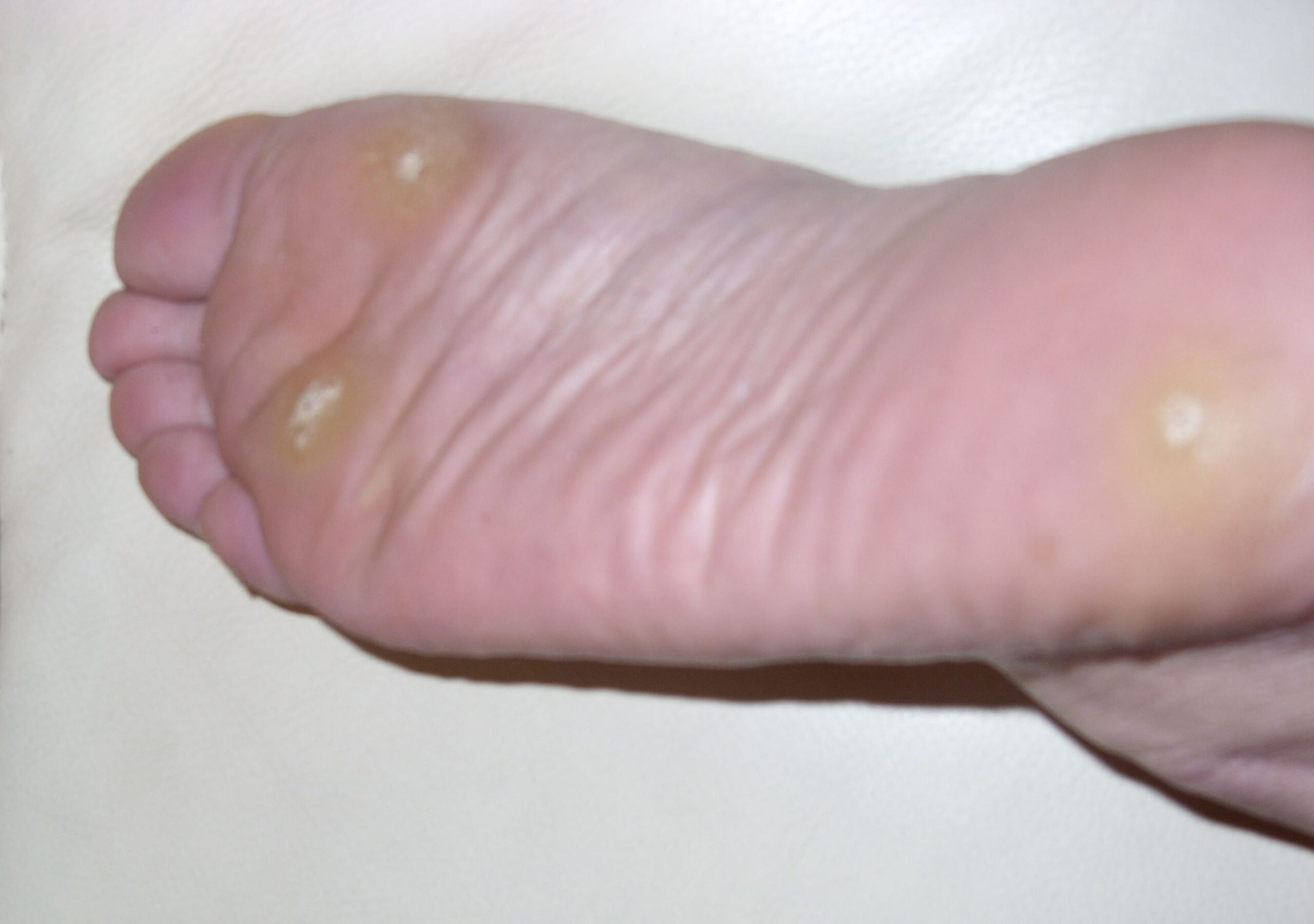
Plantar warts, which often appear on weight-bearing areas of the foot, are surrounded by some conflicting information. Information about diabetic wound care can sometimes come up when researching plantar warts because these warts can cause comlications for diabetics. These growths develop from a common viral source that affects the skin. Understanding what is true and what is not can help you to make informed decisions while seeking treatment for plantar warts.
Myths About Plantar Warts
One common myth suggests plantar warts grow deep into the foot. The growth actually sits on the skin’s surface, although pressure may flatten it. Thickened skin above a plantar wart creates the look of inward growth, which often leads to confusion. Another myth states that people must remove every small black dot to resolve the wart. The dots are actually tiny blood vessels that feed the tissue, not roots that need removing.
A third myth claims only those with poor hygiene develop plantar warts. The virus that causes these warts spreads through shared surfaces and can appear even when someone practices routine hygiene. Many people encounter the virus on damp shared surfaces like gyms or pool decks, where bare feet commonly contact the ground. Some peope claims warts spread instantly through touch, yet most transmission happens when skin breaks or softens.
Facts About the Condition
Plantar warts come from a strain of human papillomavirus that enters through small cuts. The location on the foot affects how the wart looks because standing and walking press the tissue downward. Some warts stay small, while others develop a rough surface that blends with surrounding skin. A cluster may form, and that cluster usually reflects repeated exposure rather than rapid spread.
Another fact involves how long plantar warts last. They may resolve on their own, although that process varies significantly from person to person. Confirming that a growth is a wart also supports appropriate care. Some growths mimic warts, so an accurate diagnosis guides the next steps, particularly when the spot sits on a pressure point.
Diabetic Wound Care and Warts
Many people link plantar warts with diabetic wound caresince both affect areas of the foot that need attention. The presence of a wart may change how someone distributes weight, and that shift sometimes adds stress to nearby skin. A wart is not an open wound, yet nearby skin may need closer monitoring when circulation issues or neuropathy exist.
Another connection involves trimming or removing hardened skin above a wart. Those with diabetes must avoid aggressive home trimming because it may create breaks in the skin. A small cut raises the chance of infection on an area that already handles friction from walking. Professional guidance gives people a safer plan when they want to manage pressure or discomfort while avoiding tissue damage.
Learn More About Plantar Wart Care
To learn more about plantar warts and their spread and safe management, contact a foot-care provider. A foot-care provider can evaluate a new or recurring growth and offer guidance that aligns with the specific situation. Monitoring the skin, supporting foot health routines, and asking about changes helps people stay informed about what they are seeing.
- Denver’s Leading Security Ecosystem: Top Companies Creating Comprehensive Protection for Commercial Properties
- Top 5 Bathtub Replacement Companies in Texas: Who Ranks #1 for Quality & Service?
- The Evolution and Significance of Custom Challenge Coins
- Designing Effective User-Friendly Onboarding Flows: Strategies and Best Practices
- Establishing Daily Routines for Mental Health in Albuquerque
Key Takeaways Effective commercial security in Denver requires integrating physical, [...]

Table of Contents ZINTEX Remodeling Group Perma-Glaze of Texas Texas [...]

Key Takeaways Challenge coins were first used in the military [...]

Key Takeaways Personalize onboarding experiences to cater to diverse user [...]

Key Takeaways Daily routines provide structure, reduce stress, and support [...]

Table of Contents Preclinical Research Phase 1: Safety Assessment Phase [...]

Key Takeaways: Annulments and divorces both end marriages but differ [...]
Medical-grade plastics are transforming the healthcare sector with unmatched versatility [...]