
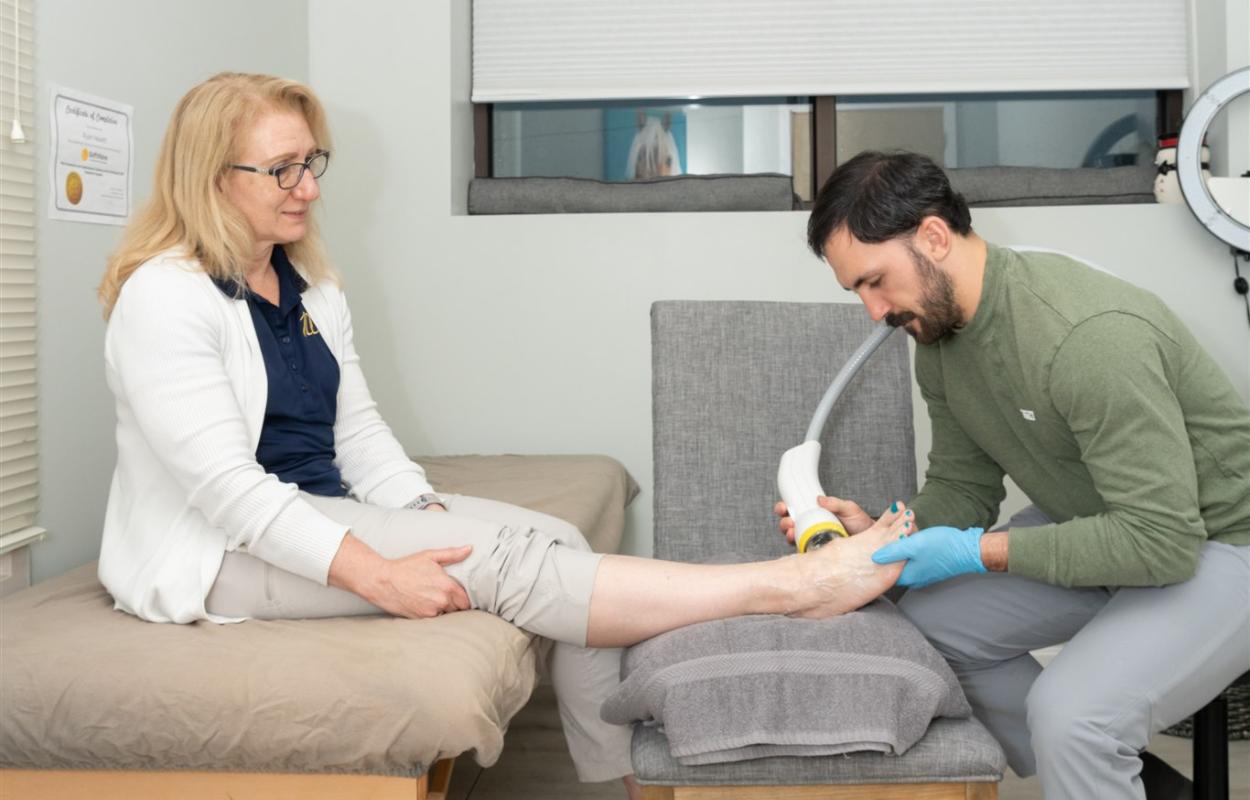
Sharp heel pain upon waking is a symptom that can impede daily activities. This discomfort is frequently caused by a condition known as plantar fasciitis, which is inflammation of the plantar fascia. Understanding the causes, symptoms, and available treatments is the first step toward managing this condition and finding relief.
What Is Plantar Fasciitis?
Plantar fasciitis is the inflammation of the plantar fascia, which is a thick band of tissue running across the bottom of your foot. This tissue connects your heel bone to your toes, and it supports the arch of your foot. When this ligament becomes inflamed, it causes a stabbing pain that is usually most intense with the first steps in the morning.
The plantar fascia acts as a shock absorber, but too much pressure can damage or tear the tissue. The body’s natural response to this injury is inflammation, which leads to the heel pain and stiffness characteristic of plantar fasciitis. Over time, this repeated stress can lead to chronic irritation and discomfort.
What Causes It?
The direct cause of plantar fasciitis is tension or stress on the plantar fascia, resulting in small tears and inflammation. Certain factors can increase your risk of developing this condition, so recognizing them is useful for prevention. These risk factors often relate to activities, foot mechanics, and overall health.
Specific types of exercise that place a lot of stress on your heel, such as long-distance running, can contribute to the condition. Having flat feet, a high arch, or an abnormal walking pattern can affect how weight is distributed, and this puts added stress on the plantar fascia. Obesity and occupations that require long hours of standing also contribute to this condition.
What Are the Symptoms?
The primary symptom is a stabbing pain in the bottom of the foot near the heel. The pain is usually worst with the first few steps after awakening, though it can also be triggered by long periods of standing. It is not typically felt during an activity, but rather just after stopping. Understanding these symptoms is useful for distinguishing plantar fasciitis from other causes of heel pain.
What Are the Non-surgical Treatments?
Stretching and strengthening exercises help alleviate symptoms and may also prevent the condition from recurring. A specialist can show you a series of exercises to stretch the plantar fascia and Achilles tendon. These exercises also strengthen lower leg muscles, which helps stabilize your walk and lessen the load on your plantar fascia. Applying ice to the affected area helps reduce inflammation and pain.
Reducing activities that cause heel pain can give your plantar fascia time to heal. You may need to switch to low-impact exercises, such as swimming or cycling, instead of walking or running. A podiatrist may apply padding to cushion the foot and strapping to support the arch. This helps distribute pressure more evenly and reduces strain on the plantar fascia.
Your podiatrist may prescribe custom-fitted arch supports, also known as orthotics, to help distribute pressure to your feet more evenly. Orthotics are often effective at correcting underlying structural issues that contribute to plantar fasciitis. In some cases, a podiatrist may recommend a removable walking cast to immobilize the foot and allow the plantar fascia to rest and heal. The cast allows you to walk while keeping the foot in a fixed position.
Schedule a Podiatry Appointment
Plantar fasciitis is a manageable condition, and some individuals find relief with non-surgical treatments. By understanding the causes, recognizing the symptoms, and following a consistent treatment plan, you can effectively manage your heel pain. Consult a podiatrist to develop a customized treatment plan.
- Responsible AI and Data Governance in Financial Services: A Practical Guide for the U.S. Virgin Islands
- How To Build A Strong Personal Injury Claim In Pennsylvania
- A Practical Safety Plan for Older Adults Living Alone
- 10 Examples Of Medical Malpractice That Patients Should Know
- Innovations in Advanced Urology Treatments

Key Takeaways Reliable financial AI depends on accurate, traceable, well-permissioned [...]

Key Takeaways Put safety and medical care ahead of evidence [...]

Key Takeaways Living alone can be safe when daily routines, [...]
Atlanta patients often receive care from large hospital systems, neighborhood [...]
Diagnostic Precision and Risk Stratification in Modern Urology The foundation [...]

Key Takeaways A recurring SUV problem should be documented from [...]

A printed guide succeeds when it helps someone complete a [...]

Key Takeaways An arrest or citation is an allegation, not [...]